Axios House: Growing climate risks challenge homeowners, insurers and communities

Add Axios as your preferred source to
see more of our stories on Google.
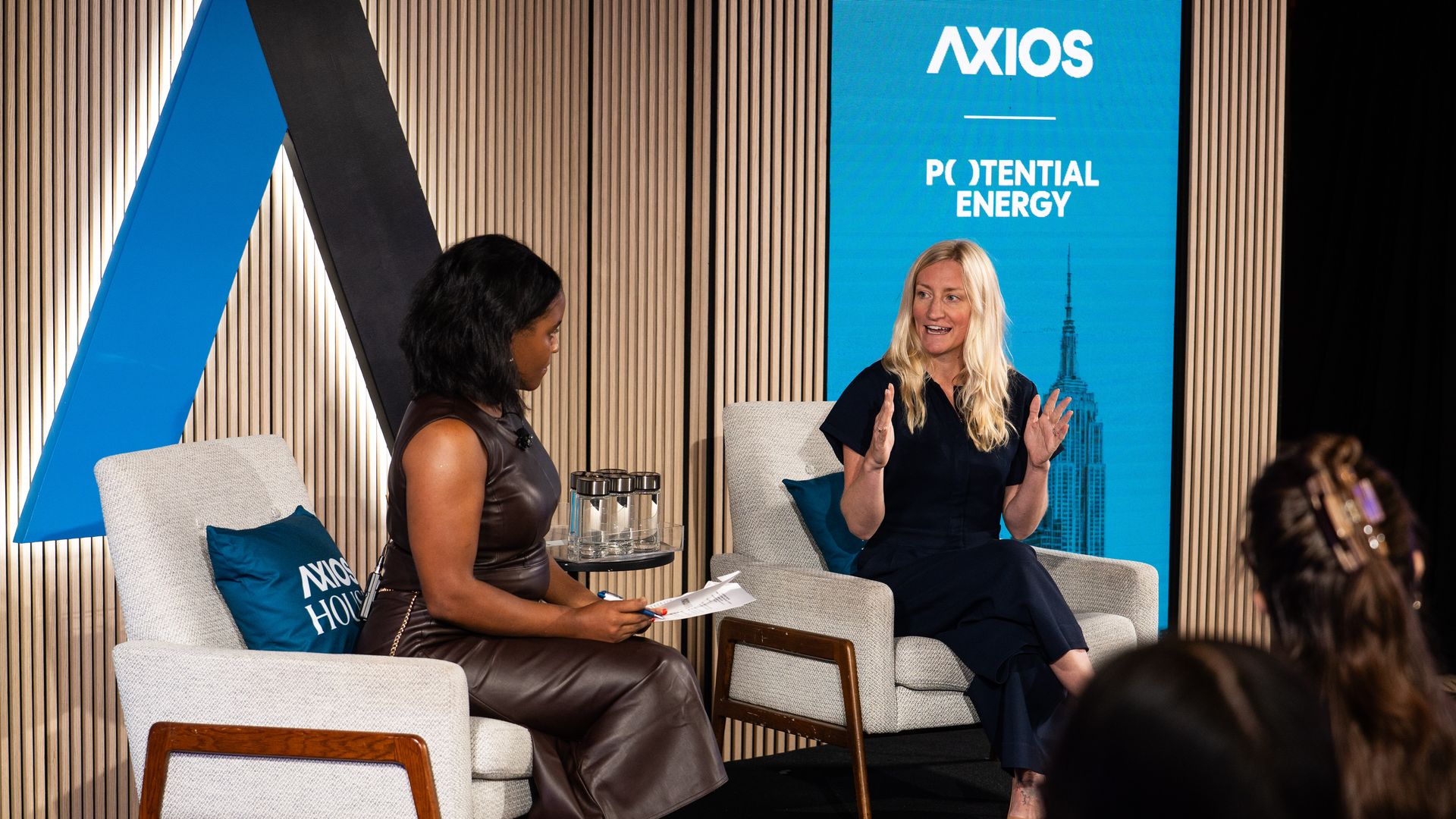
Axios' Courtenay Brown in conversation with The Resiliency Company CEO Abby Ross. Photo: Sam Popp on behalf of Axios
NEW YORK – The costs associated with climate disasters are far-reaching and sometimes indirect, speakers said at Axios House at Climate Week and the UN General Assembly.
Why it matters: Natural disasters linked to climate change are becoming increasingly devastating, with rising premiums and costly home damage creating a crisis for consumers and insurers.
- Axios' Courtenay Brown spoke with DeltaTerra Capital founder and CEO David Burt, The Resiliency Company CEO Abby Ross, and First Street chief economist Jeremy Porter at the Sept. 23 event. The event was sponsored by the Potential Energy Coalition.
What they're saying: "One really important context is that the wildfire risk is increasing," Ross said. "So the opportunity to build with resilience is going to be more affordable at the time of new build and rebuild."
- The best time to prepare a home to weather growing climate disasters is when it's built, Ross said. "It's a lot more expensive to retrofit a home."
- "When you think about a market where insurers are pulling out, there are higher losses, building with insurability and resilience in mind is critical in this moment," Ross said.
The bottom line: Climate risk has broader impacts on local economies.
- People are avoiding living in certain areas due to risks such as flooding, Porter said.
- "As we see that areas are becoming less desirable, that ends up impacting things like tax revenues, it impacts commercial viability, it ultimately impacts rent demand for commercial properties," Porter said.
- "There are these indirect effects that work their way through the system once you start to have high levels of climate risk for specific communities."
Zoom out: "It's kind of ironic, because if the central banks were really actually paying attention instead of being told not to about these changes and these risks in markets, and real estate markets in particular, which really, really affect homeowners and households, they would probably be more accommodative," Burt said.
Content from the sponsored segment:
In a View From the Top conversation, Potential Energy Coalition founder and CEO John Marshall said the climate movement needs to be more apolitical to be successful.
- "That feels really hard today," Marshall said. "The very interesting thing about going directly after people's real lives, their real costs, especially locally, is that you have an impact for both conservatives and progressives alike. That's going to happen even more."
- "So the climate message is a means by which we can actually build a stronger, less political climate movement over time."
