EPA agrees to expanded nuclear waste storage at New Mexico site

Add Axios as your preferred source to
see more of our stories on Google.
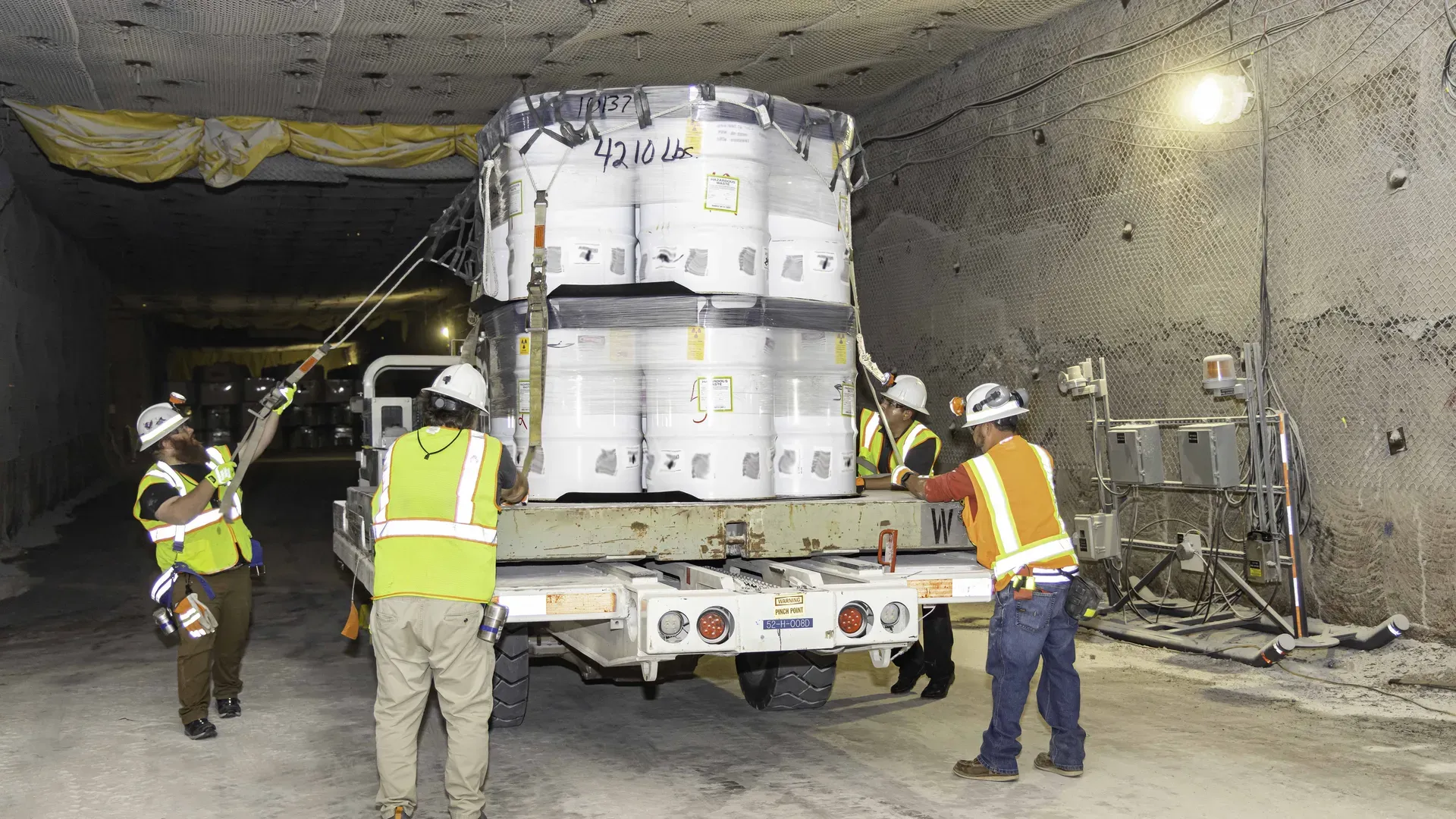
Drums of nuclear waste are unloaded underground at WIPP. Photo: Roy Neese/SIMCO
The EPA has agreed to the Energy Department's request to dig out two new underground areas to store nuclear waste at the only permanent U.S. burial site for radioactive materials.
Why it matters: Critics of the Waste Isolation Pilot Plant (WIPP) say the approval represents a significant expansion of the southeastern New Mexico facility, which they say was only intended to dispose of wastes for several decades before closing permanently.
Driving the news: The Energy Department sought a change in its permit for WIPP because of storage capacity it said was lost in part from a 2014 drum eruption that forced a shutdown of the site for more than two years.
- "EPA is in general agreement with DOE's approach and DOE's interpretation" of computer modeling showing the two additional waste areas wouldn't result in excessive radiation releases, Abigale Tardif of EPA's Office of Air and Radiation said in a July 31 letter to DOE.
- At a public hearing last year in Santa Fe, N.M., DOE and Sandia National Laboratories scientists said the potential for releases was modeled over both the short and long term.
- The EPA said Tuesday it submitted a Federal Register notice on the approval, but doesn't yet have a publication date.
Catch up fast: WIPP has been open since 1999 to dispose of discarded tools, clothing and other materials generated from making nuclear weapons, as well as surplus plutonium from the bombs themselves.
- The EPA's approval is for two panels that would each contain seven rooms. Those rooms are as long as a football field, 13 feet high and 33 feet wide.
The other side: WIPP critics said the additional panels would pave the way for an unwanted expansion of the site. They said that expansion contradicts the plant's stated mission.
- "'Pilot plant' means it was supposed to be the first of many repositories — not the only one," said Don Hancock, director of the nuclear waste safety program at Albuquerque's Southwest Research and Information Center.
