U.S. wind sector seeing a rebound — for now

Add Axios as your preferred source to
see more of our stories on Google.
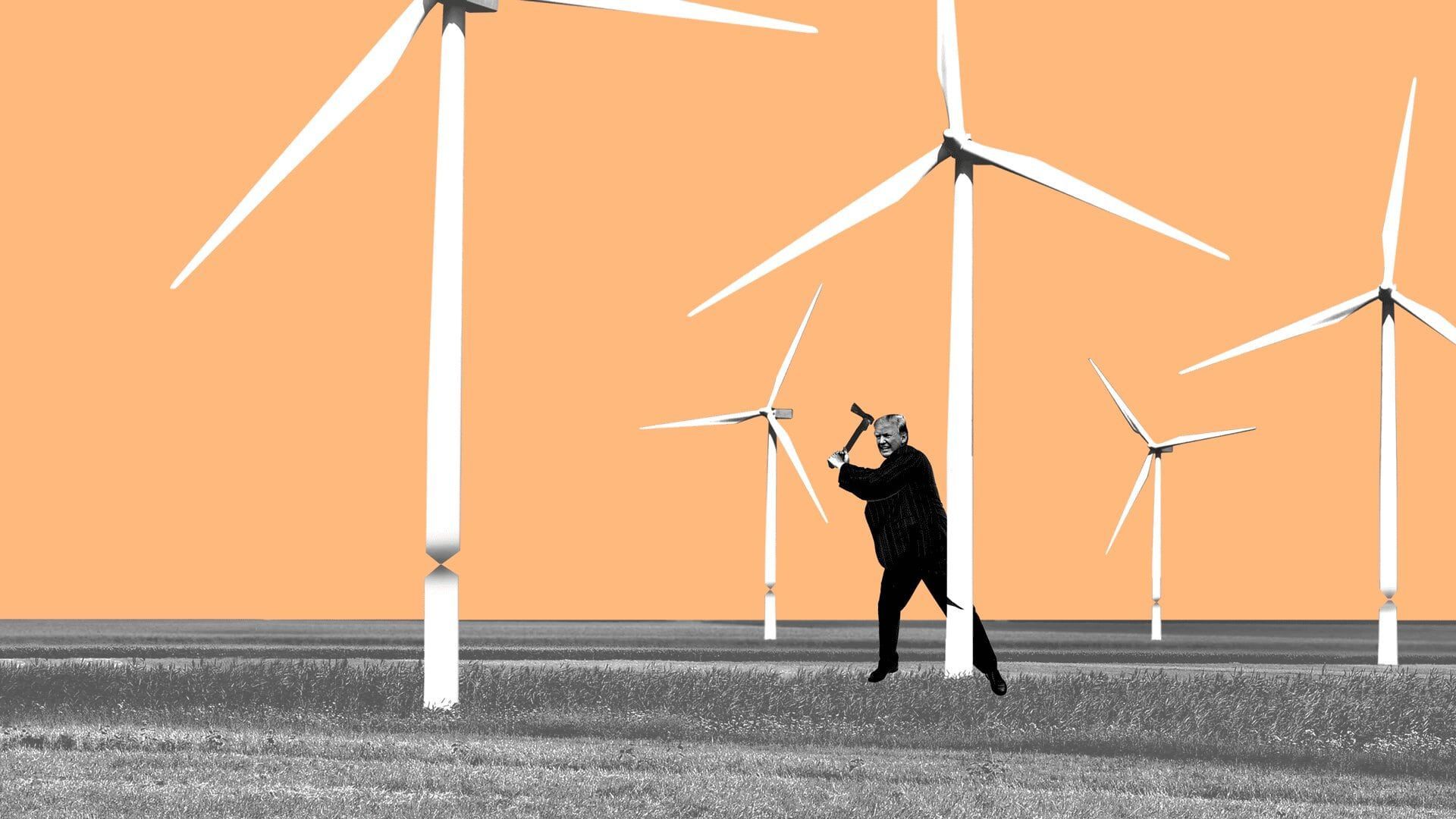
Illustration: Lazaro Gamio/Axios
The U.S. wind sector is seeing a rebound for the moment, but big problems loom, per new data and industry analysis of Trump 2.0 policies.
Why it matters: Wind is the country's largest source of renewable electricity, providing roughly 10% of U.S. power in 2023.
- But alongside EVs, it's the tech that President Trump most dislikes — and that's filtering into agency decision-making.
Driving the news: The U.S. added 2.1 gigawatts of new wind capacity in the first quarter of 2025, a significant increase from Q1 2024, per Wood Mackenzie and the American Clean Power Association.
- Their latest report sees 8.1 GW of new capacity in 2025, including repowering of projects (a small slice of the total).
- That's a roughly 56% rise from last year but well below 2020-2022 levels, and additions will average about 9GW over the next five years, they project.
Threat level: One sign of headwinds is that new turbine orders plummeted 50% in the first half of 2025 compared to last year.
- Recent and emerging hurdles like tariffs could further cloud the outlook, even as developers move fast to capture incentives.
- One is Trump's July 7 directive to the Treasury Department to take a hard line on the new budget law's phaseout of solar and wind credits.
More recently, the Interior Department started requiring new layers of review for dozens of regulatory steps and filings for wind and solar projects, which isn't modeled in the latest ACP and Wood Mackenzie outlook.
- Interior said it's "ending preferential treatment for unreliable, subsidy-dependent wind and solar energy."
Friction point: A separate industry analysis finds that the new Interior policy will affect projects far beyond federal lands, which the agency directly regulates but form a small share of the country's renewables portfolio.
- The analysis — viewed by Axios — finds that 27 of the nearly 70 actions subject to more review "potentially impact projects on private lands."
- Think everything from reviews under species protection laws to a suite of actions for private lands projects that tie into transmission that crosses public lands.
The bottom line: The jump in Q1 installations and the current project pipeline shows "resilience" and the ability to provide "clean, affordable, and reliable energy," said John Hensley, ACP's senior VP of markets and policy analysis.
- But his statement added: "This momentum is threatened by the changing policy landscape."
