Forests are sucking up much less carbon

Add Axios as your preferred source to
see more of our stories on Google.
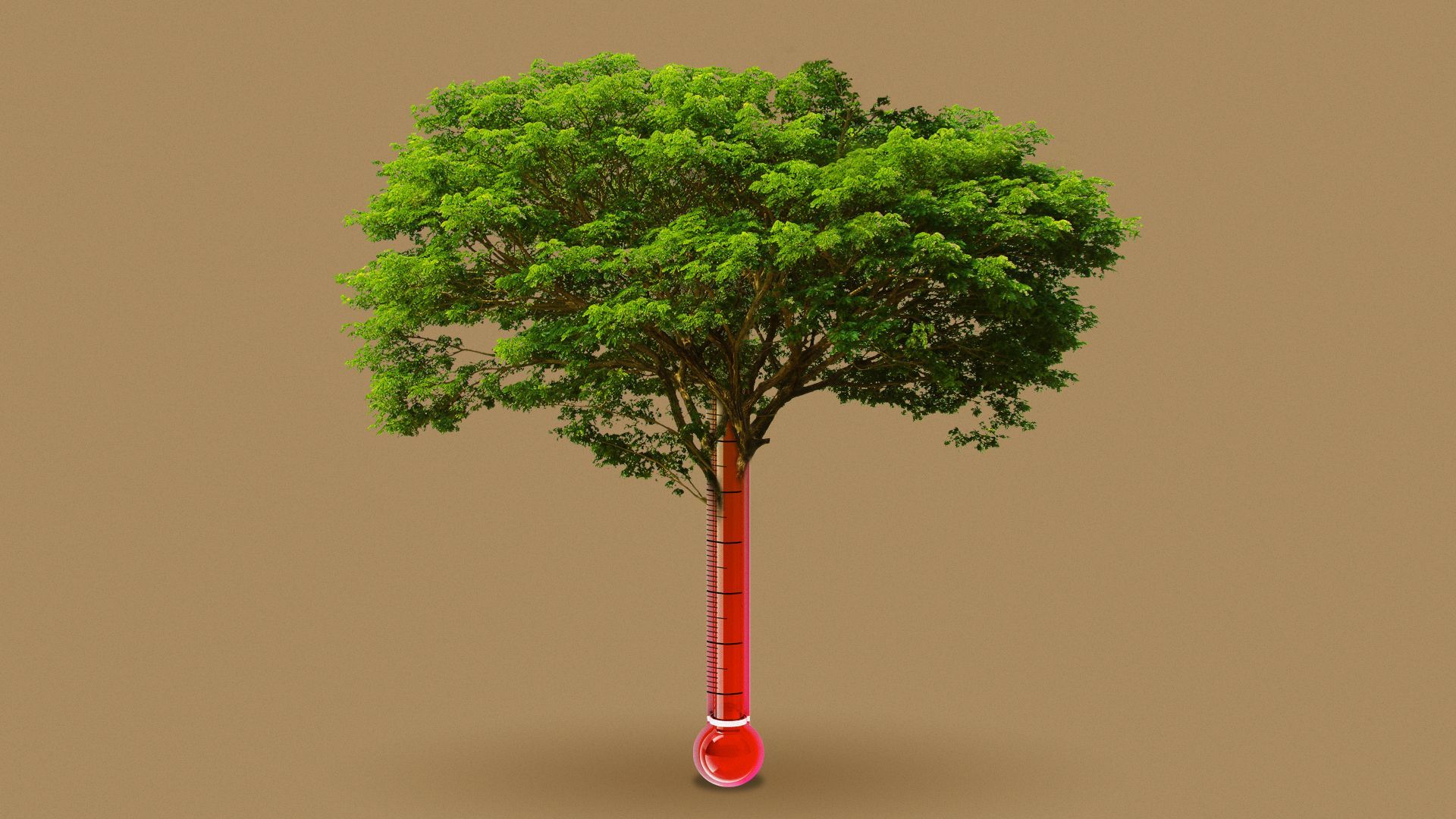
Illustration: Megan Robinson/Axios
The power of the world's forests to check the growth of planet-warming emissions has weakened in recent years, new data and analysis find.
Why it matters: In typical years, forests and other vegetation suck up roughly 30% of emissions from burning fossil fuels.
- But "the past several years have been anything but typical," says the World Resources Institute, which produces closely watched forest data.
- CO2 absorption in 2023 and 2024 was only one-quarter of average levels.
State of play: Huge fires — such as Canada's most-destructive wildfire season ever in 2023 — further eroded forests' balance of absorbing emissions versus creating them via tree loss and fires in the last couple of years.
- The "sink" effect in 2023 was the lowest in over two decades at 1.1 billion tons of CO2-equivalent when considering all planet-warming gases. It grew only slightly last year.
Stunning stat: The surge in fires in 2023 and 2024 released over 4 billion tons of greenhouse gases in both years.
- "That's equivalent to adding a third of China's annual emissions into the atmosphere each year," the analysis states.
Threat level: There's real risk that tree loss — from farming, logging, fires and more — turns the world's forests into a net source of CO2 emissions instead of a sink.
- The conversion from carbon suck to carbon source is already afoot in some regions, including tropical forests of Bolivia and boreal forests in Canada, WRI finds.
What we're watching: The WRI analysis offers eight broad "levers" for shoring up forest carbon sinks.
- They range from better management to stem fires' impacts to stronger conservation to techniques that enable continued logging of working forests while better preserving CO2 absorption.
