Supreme Court ruling could bring fresh risks to California EV rules

Add Axios as your preferred source to
see more of our stories on Google.
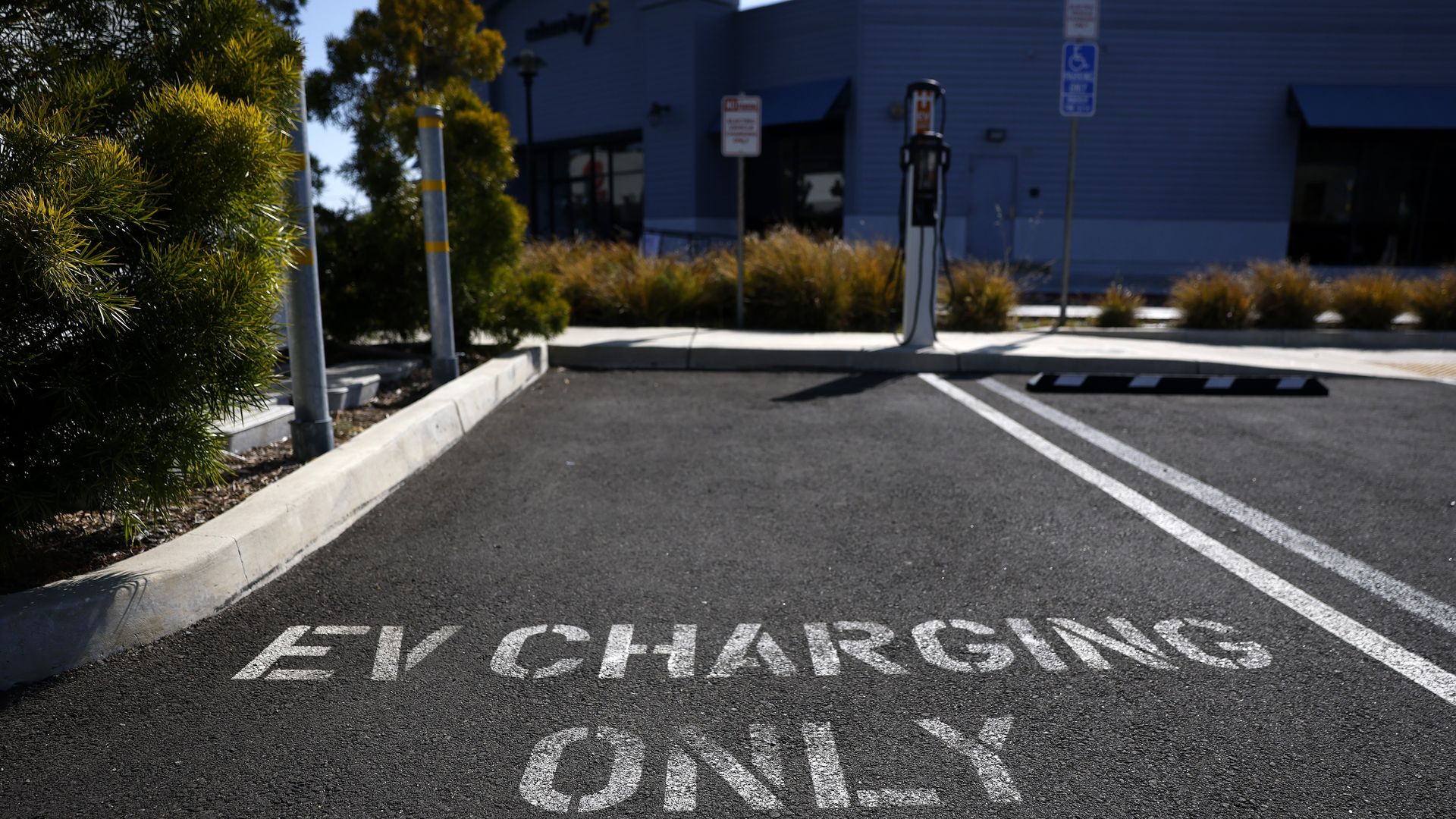
An electric vehicle charging station in Sausalito, Calif. Photo: Justin Sullivan/Getty Images
The Supreme Court ruled Friday that fuel producers have standing to challenge EPA approval of California vehicle emissions and electric vehicle policies.
Why it matters: The 7-2 decision enables more lines of attack against California officials, who are already battling GOP and Trump 2.0 efforts to thwart rules that go beyond federal standards.
- Disputes over California's vehicle rules are a big deal, especially as the state defends separate rules — not directly at stake here — to phase out sales of gas-powered cars by 2035.
- It's the country's largest auto market and other states, under the Clean Air Act, have discretion to follow its policies.
Driving the news: The ruling, written by Justice Brett Kavanaugh, overturns an appellate decision on standing, siding with fuel producers who say they're harmed by the "clean car" rules.
- But it doesn't address the merits of the EPA Clean Air Act waiver issued in 2022 that reinstated rules first issued in 2012. (The ruling notes that President Obama's EPA had approved a waiver that was rescinded under Trump in 2019.)
- The rules address tailpipe emissions, and automakers' EV manufacturing shares through model year 2025.
State of play: California had successfully challenged gasoline and ethanol producers' standing in the U.S. Court of Appeals for D.C. Circuit, but Kavanaugh harshly criticized California's reasoning.
- "The regulations likely cause the fuel producers' monetary injuries because reducing gasoline and diesel fuel consumption is the whole point of the regulations," he wrote for the majority.
- "The government generally may not target a business or industry through stringent and allegedly unlawful regulation, and then evade the resulting lawsuits by claiming that the targets of its regulation should be locked out of court as unaffected bystanders," Kavanaugh wrote.
The other side: The Environmental Defense Fund, which supports California's rules, emphasized that today's high court decision is narrow.
- "While the Supreme Court has now clarified who has grounds to bring a challenge to court, the decision does not affect California's bedrock legal authority to adopt pollution safeguards, nor does alter the life-saving, affordable, clean cars program itself," EDF general counsel Vickie Patton said in a statement.
- California Attorney General Rob Bonta said in a statement that he's disappointed with today's ruling, but added: "[W]e will continue to vigorously defend California's authority under the Clean Air Act."
The intrigue: Justice Ketanji Brown Jackson, in a dissent, said she feared the decision would further fuel perceptions that the court is overly sympathetic to corporate interests.
- "For one thing, it could have denied certiorari, recognizing that one of the core components of California's emissions program—the electric-vehicle mandate—is about to sunset," she wrote.
- Justice Sonia Sotomayor penned a separate dissent.
What we're watching: How and whether it influences disputes over EPA's 2024 blessing of California's separate rules to end gas-powered car sales in 10 years.
- Congress passed and President Trump recently signed a measure to scuttle EPA waivers that allowed those rules.
- But California officials are litigating the matter.
