Exclusive: Red-state factories most at risk in climate fight, report finds

Add Axios as your preferred source to
see more of our stories on Google.
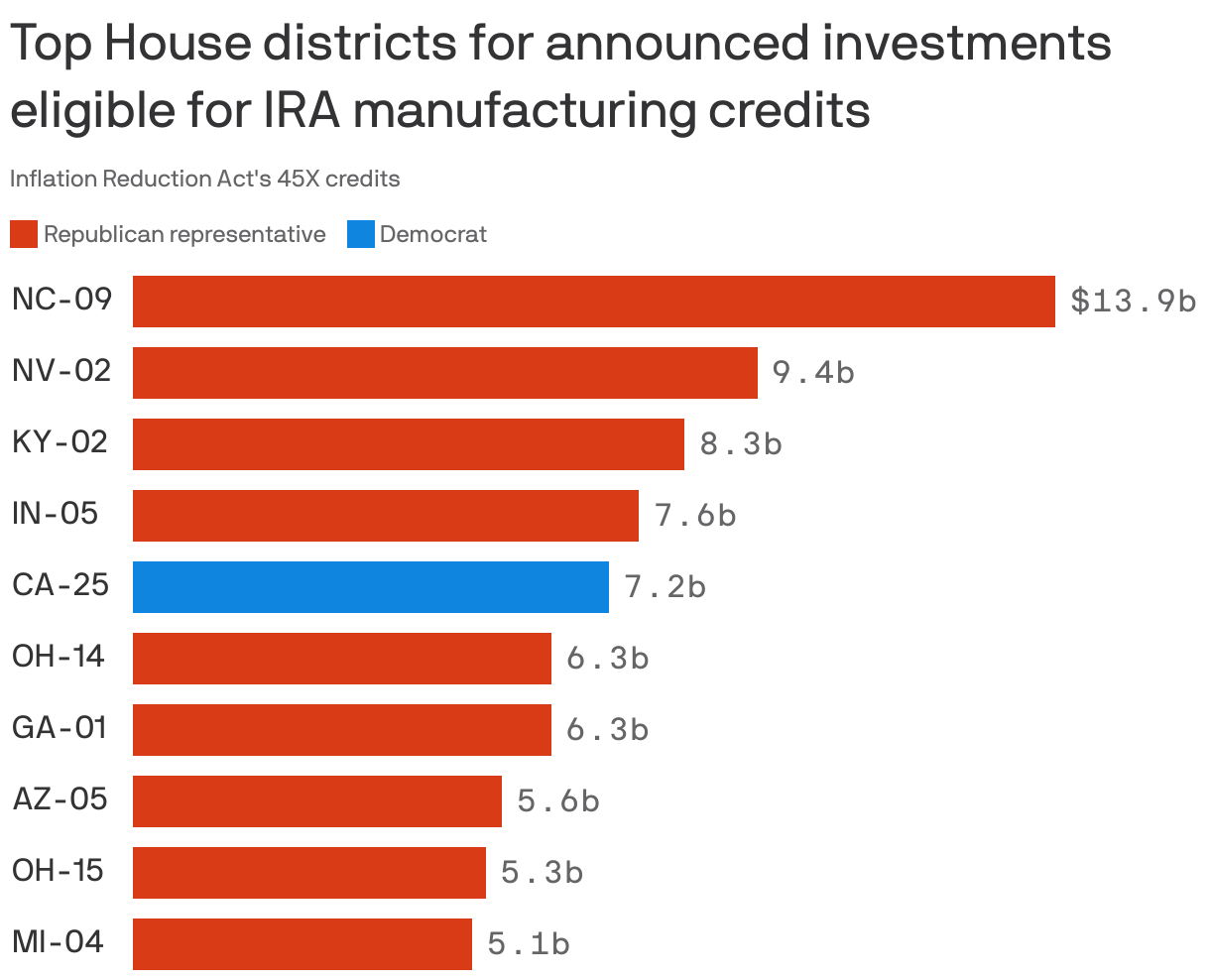
Inflation Reduction Act tax credits for making low-carbon energy equipment are spurring over $185 billion in planned or operating factory investments, a new analysis finds.
Why it matters: The Atlas Public Policy report arrives amid Capitol Hill debates that could vastly scale back the incentives.
- The research and advisory firm found that 77% of planned spending on credit-eligible projects it's tracked is in GOP-held House districts.
- You can see the top 10 above.
Catch up quick: The 2022 climate law created subsidies for manufacturing a suite of products — think solar cells and wafers, wind blades and towers, EV batteries, processing critical minerals and more.
Yes, but: The House-passed budget plan would restrict the timeline and access in several ways that may render it "effectively impossible to claim," Atlas notes.
- It ends "transferability" that makes the credit market more fluid and available to more projects.
- It bars credits for projects with any links to China, including materials. The bill also ends the incentive for wind in late 2027.
Zoom in: "To date, a total of $48.3 billion in announced investments and 62,700 jobs are associated with operational facilities that qualify for the tax credit," the Atlas report finds.
- It shows another $137.2 billion and 103,100 jobs in "tracked announcements at facilities that are planned or under construction."
- Battery and related component manufacturing is the biggest slice, such as Toyota's planned investments in North Carolina.
- Atlas also says their tallies are likely undercounts of the credits' impact.
State of play: Credit backers say it drives projects that will make the U.S. competitive in growing global clean tech industries and boost energy security.
- But GOP critics call it part of an expensive "green new scam" aimed at forcing preferred technologies onto consumers.
What we're watching: Senate Republicans' ongoing work to craft their version of the House-passed "One Big Beautiful Bill."
- A number of GOP senators call House repeals and limits on various IRA credits too aggressive, but what that means for the manufacturing incentives is unclear.
- Low-carbon energy industries are lobbying aggressively for changes to the House-passed bill.
The bottom line: "Elimination of the tax credit or reforms that make it inaccessible could have severe consequences for American manufacturing, weakening investor confidence, and potentially allowing China and Europe to dominate the future of clean energy production," the report argues.
