Axios Future of Health Summit: Nutrition and health trends aren't going anywhere, experts say

Add Axios as your preferred source to
see more of our stories on Google.
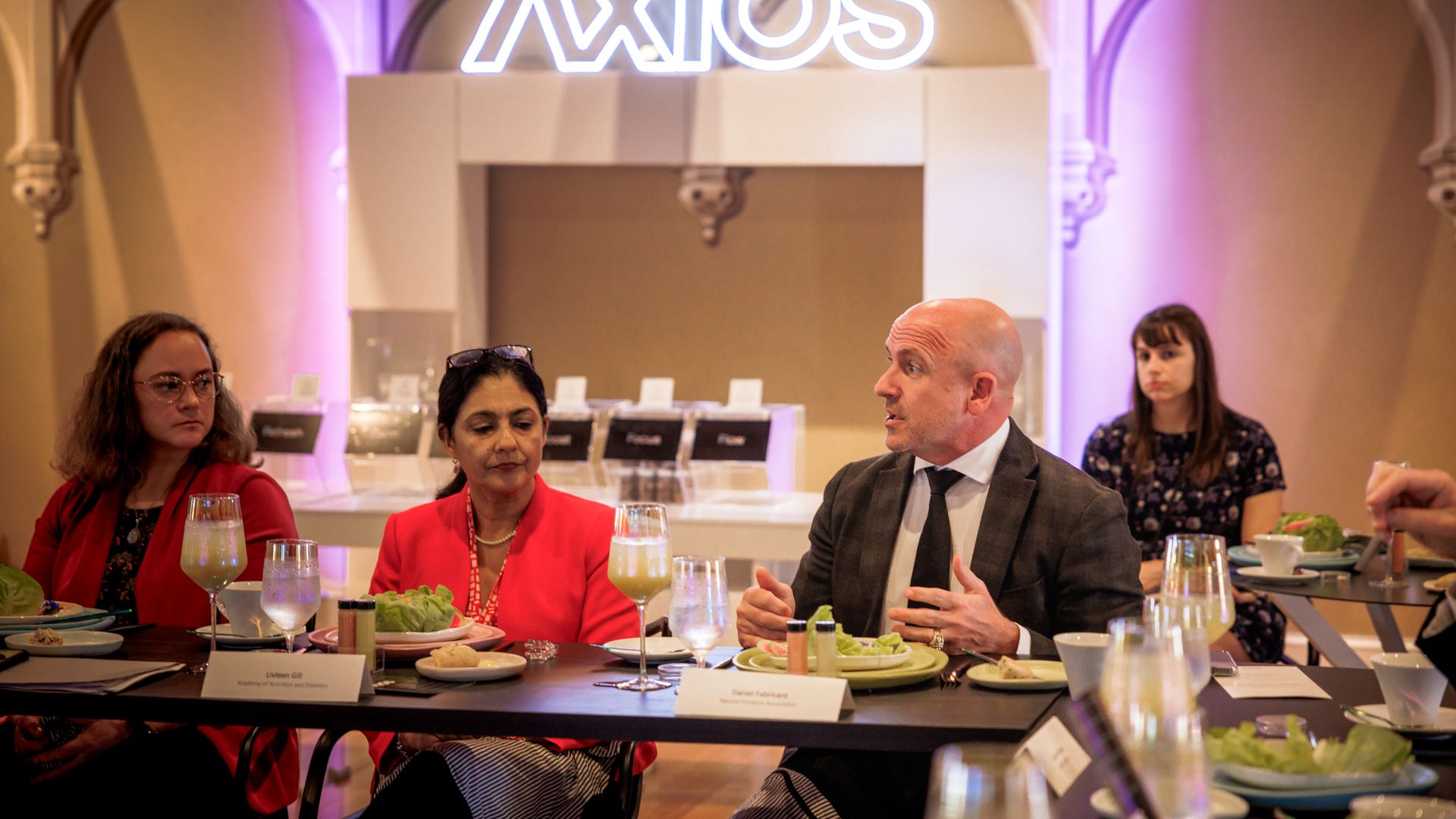
Attendees at the Future of Health Summit Expert Voices Roundtable. Photo: Gabriel Espinal on behalf of Axios
WASHINGTON – Healthy food isn't just a wellness fad, it's part of the self-care movement and it's here to stay, experts at Axios' Expert Voices roundtable said May 14.
- Axios' Adriel Bettelheim and Erica Pandey moderated the discussion, which was sponsored by Danone.
Why it matters: Growing attention from Congress and the public is reshaping how society approaches food, especially as more focus is put on the link between ultra-processed foods and chronic illnesses.
By the numbers: The nation spends $1.1 trillion on pharmaceuticals and should find other ways to be healthier through preventative approaches like better nutrition and lifestyle choices, Strategic Health Care senior vice president Duanne Pearson said.
- "If we continue to spend and sustain the disease versus reverse it, and find other ways to get people healthier, we're going to be on a cost trend we can't sustain," Pearson said.
The role of nutrition influencers on social media can stir up conversations but also confusion.
- Social media has helped open up the conversation around food and healthy lifestyles, but it also leaves room for misinformation and commercial influence through paid brand deals.
- "You can spend an hour on TikTok and probably [see] 10 different, extremely strong perspectives on how you should eat, and all of them will conflict," Berry Street CEO Noah Kotlove said.
Driving the news: As Trump's administration moves to restrict sugary drinks and processed foods in school lunches and from SNAP, some experts are calling for clearer definitions. For example, they'd like to see what counts as "processed food" and warn against an all-or-nothing approach.
- "We really need to define what the processed group is, and whether or not it's bad or not. … I think we're talking generalities, and the lack of specificity is confusing the public and policymakers about what changes need to be made to get us to where we want to be," said John Torres, Biotechnology Innovation Organization's senior director of federal government relations.
- "I feel like we're going this 'all-or-nothing' sort of trend. … If we start taxing sugary drinks, do I lose my corner stores and then you don't have access to anything? What are you replacing it with?" D.C. Councilmember Christina Henderson said.
- Kotlove pointed out that "this vilification of certain foods ends up, I think, causing more harm than good. … This all-or-nothing kind of mindset gets people sort of paralyzed. … Something we get a lot with our patients is just kind of healing this relationship with food that's become so toxic because of all of the messaging they get."
- "If all or nothing is the spectrum that we're operating on, then nothing's ever going to work and it's easy to feel really pessimistic," he added. "So I think incremental changes and also avoiding this extremist language is a lot more productive for the average American than the polarizing nature of these conversations."
