Axios Event: Leavitt asserts White House press rules are about "opening access"

Add Axios as your preferred source to
see more of our stories on Google.
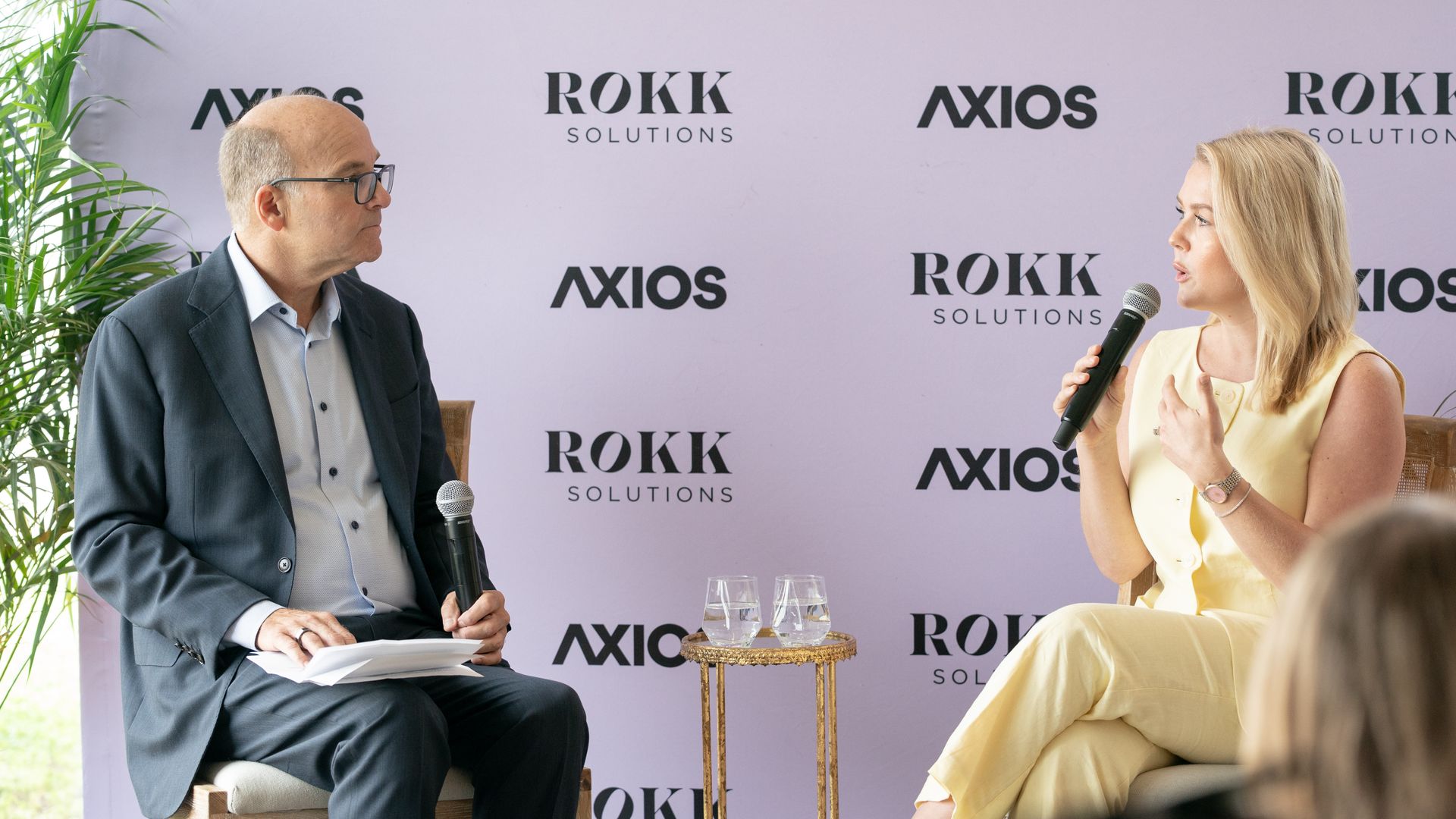
Axios' Mike Allen sits on stage in conversation with White House press secretary Karoline Leavitt. Photo credits: Cameron Smith on behalf of Axios
WASHINGTON – The White House's media strategy is centered on efforts to open access to more outlets, not limit it, White House press secretary Karoline Leavitt told Axios co-founder Mike Allen at an April 29 event.
Why it matters: The relationship between the media and the White House has changed since the first Trump administration, with several actions targeting the press and an ongoing legal battle over the administration's ban on the Associated Press' coverage of White House events.
Allen and Axios communications strategist and writer Eleanor Hawkins spoke with Leavitt and Airbnb global head of policy and communications Jay Carney at the event, sponsored by ROKK Solutions.
What they're saying: "I don't view them as restrictions, we view them as opening access to more outlets, more voices, more news journalists and outlets," Leavitt said when asked about the White House's decision to curtail press access to the AP.
- "We shouldn't have a few outlets who have a monopoly over the briefing room or over that 13-person press pool that covers the president," Leavitt said.
- The White House's plan to take over the seating chart for reporters in the briefing room is another sign the administration doesn't intend to keep decades-old rules governing the media in place.
Driving the news: Other changes from the Trump team, including limiting broader wire services access in the White House press pool, have sparked concerns about press freedoms.
- "It's not about ideology. It's just about increasing the wide array of outlets that have access," Leavitt said.
Zoom out: Carney, who served as President Obama's press secretary, said during his time in the administration, his team also followed a strategy of trying to reach people outside of traditional news, which "taught us a lot."
- "Back when I was in the White House working for President Obama, and we were trying to reach people who weren't following traditional news, we needed people to sign up for Obamacare," he said. "We needed young people, and they weren't reading traditional newspapers, they weren't watching the evening news."
- That led the Obama administration to appeal to younger folks through avenues like an "Ask Me Anything" session on Reddit, and booking Obama on pop culture shows.
Context: "I think it's important to recognize the media landscape has changed, to bring in new voices, to shake things up," Carney said. "I think that's admirable, and I think, you know, everybody can learn from that."
Zoom in: Carney went on to defend the AP, noting it is "an incredibly important source of news and provider of news for people around the country and the world, and we need to recognize that."
Content from the sponsored segment:
In a View From the Top conversation, Ron Bonjean and Rodell Mollineau, co-founders and partners of bipartisan communications firm ROKK Solutions, explained how the media landscape has changed under the second Trump administration.
- "In the first Trump era, dominant media reigned supreme; now it does not," Bonjean said. "Now, there's a proliferation of media, of new media, of partisan media, of influencers.
- "We have more opportunities now to express the policies of our clients, to help them win their policy campaigns by utilizing social media, by utilizing influencers and media that never existed before."
