Axios Event: Optimism about kids' online safety breaks through years of inaction

Add Axios as your preferred source to
see more of our stories on Google.
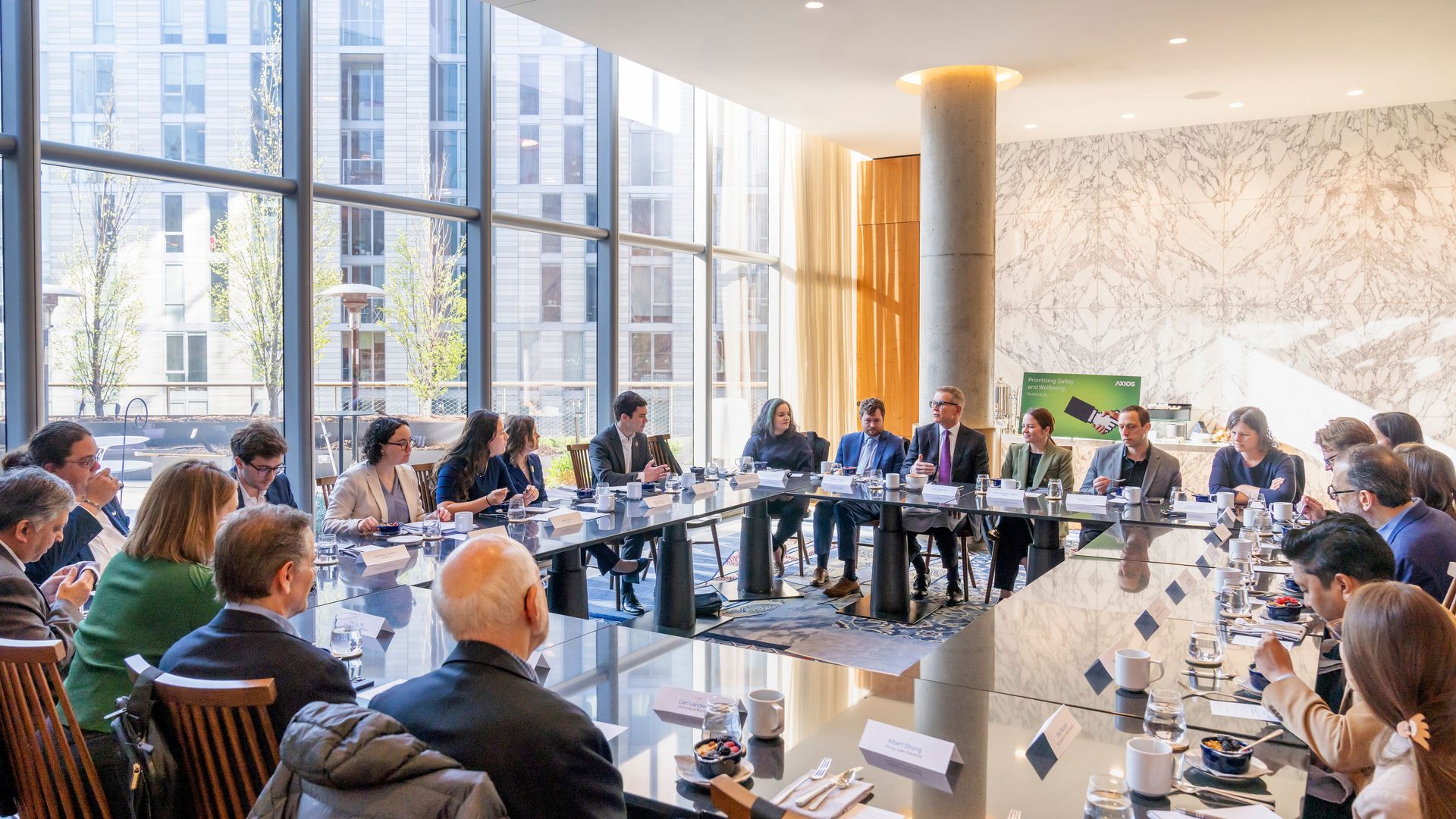
Attendees listen during the discussion. Photo: Cameron Smith on behalf of Axios
WASHINGTON – Advocates and tech platforms, who have long worked to address children's online safety issues, are realizing tapping into parents and kids' experiences must be part of the solution, attendees said at a roundtable discussion on April 9.
Why it matters: Disagreements around the scope of online safety laws have stalled substantive legislative action on the issue, despite yearslong calls for Congress to act to better protect children online.
Axios' Maya Goldman and Maria Curi moderated the discussion, sponsored by Roblox.
What they're saying: "We can't just keep saying that doesn't work and that doesn't work," said Jules Polonetsky, CEO of the Washington, D.C.-based nonprofit Future of Privacy Forum. "We have to sort of make hard decisions and bite the bullet and support something reasonable, even if it isn't perfect."
Driving the news: Listening to credible research on what works along with input from parents and kids themselves could inform a more effective approach, attendees agreed.
"The answer is not going to come just from legislation, it's all of the above," said Carl Szabo, who works on government affairs at TikTok.
- Szabo is encouraged by the recent "arms race" among tech companies to be the most family-friendly. "I think that's a good thing, because that's the market also driving it," he said.
- "We are starting to recognize that it's different tools for different families for different age categories, and I think that's kind of the right move forward. I think ultimately we will end up with these age category systems for the time being, and maybe that's what works."
The latest: Companies for the first time have been proactively proposing legislative action, said Sara Kloek, vice president of education and children's policy at the Software and Information Industry Association. Kloek has been working on such issues with Congress for almost 20 years.
"[E]veryone has the same motivations," Roblox founder and CEO David Baszucki said of his meetings with lawmakers on the issue, during his sponsored opening remarks.
- "We've been … supporting the Take It Down Act, supporting COPPA 2.0, in the past we supported the California Age Appropriate Design Code," Baszucki said.
- "Everyone I've met with wants to write good legislation and try to help and solve the problem, so it's made me optimistic."
Context: The mental health issue is front and center when it comes to youths' online safety. However, it's nuanced: While the internet is a source of anxiety, depression and other harms for some, many young people, especially LGBTQ+ youth, benefit from the sense of community they find online.
- "Only about a third of LGBTQ youth will say that their home is always a safe and accepting environment for them," said Casey Pick, director of law and policy at The Trevor Project. "But nearly two-thirds will say they can find community and acceptance online."
Zoom in: Young people want more agency on social media platforms, said Mary Giliberti, chief public policy officer for the nonprofit Mental Health America.
- She cited a survey of young people in which they raised concerns about the content they were being shown and how hard it was to find protective features.
- "It's buried in the privacy settings sometimes, it's not consistent across platforms for them," Giliberti said. "So even though they know that they can have some impact, they have a hard time seeing the impact on the algorithm when they make some of these changes."
- "They do think that there [are] ways that you can help people to not spend so much time."
