Automakers pitch bigger EVs at LA Auto Show to jumpstart interest


Add Axios as your preferred source to
see more of our stories on Google.
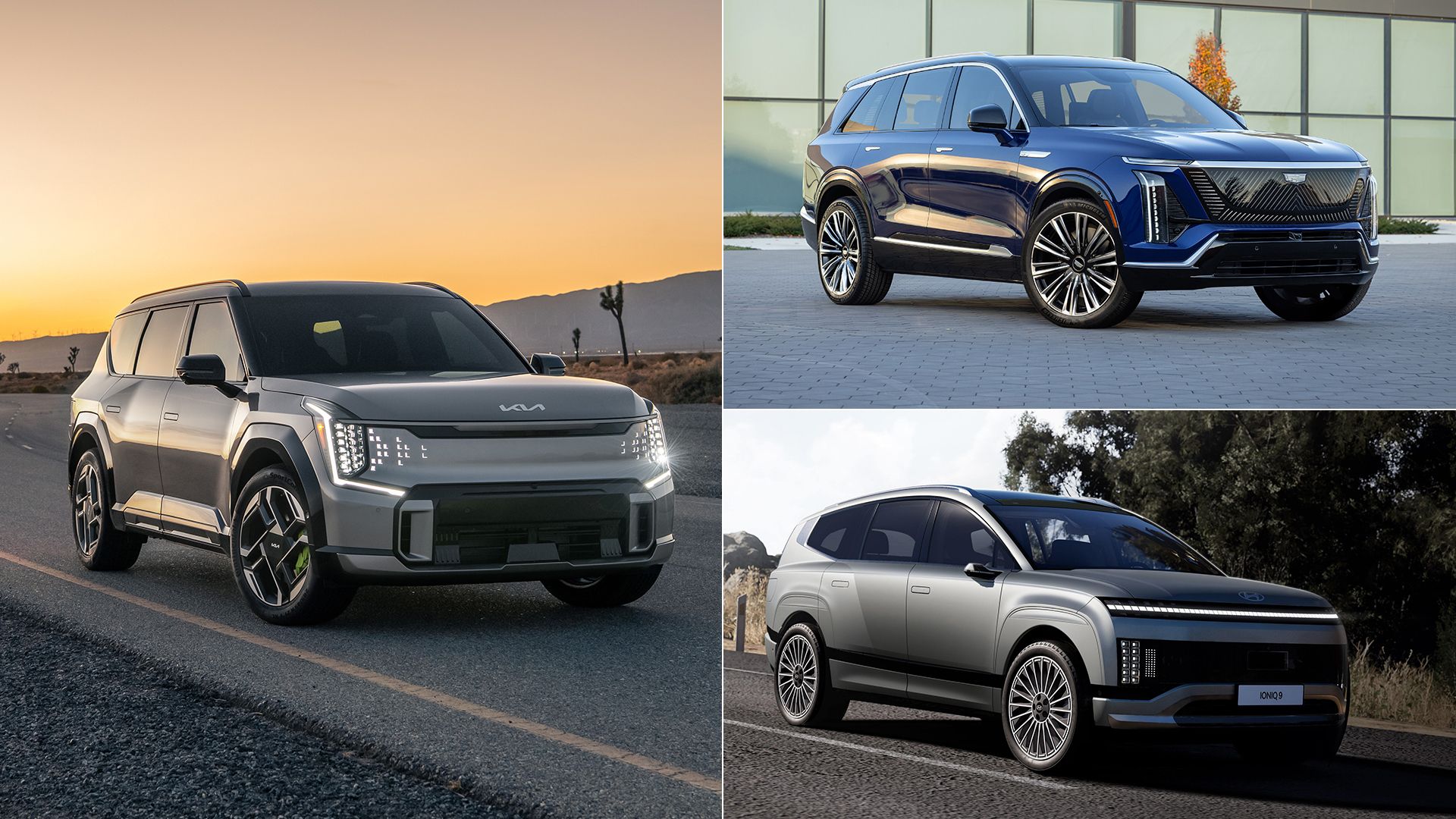
The Kia EV9 GT (left), Cadillac Vistiq (top right) and Hyundai Ioniq 9. Photos courtesy of Kia, Cadillac and Hyundai
Automakers are hoping that the big thing holding people back from buying EVs is that they're not freaking big enough.
Why it matters: Many of today's EVs are sedans or crossovers, but American car buyers love big SUVs and trucks.
State of play: Electric automakers are rolling out several 3-row, family-hauling electric SUVs at the Los Angeles Auto Show beginning today:
- The Hyundai Ioniq 9: a sleek three-row electric SUV with room for seven with a promised 300-plus miles on a single charge.
- The Cadillac Vistiq: a 3-row SUV with 615 horsepower, 23 speakers and 7 seats.
- The Kia EV9 GT: "the most powerful three-row SUV Kia has ever produced" with 501 horsepower and 0-to-60 time of 4.3 seconds.
The big picture: SUVs now represent nearly 6 in 10 new vehicles sold in the U.S., an all-time high, according to car research site Edmunds.
- Passenger car market share is at an all-time low of 19%.
- And early adopter interest in electric vehicles is waning.
The intrigue: The debut of these honking SUVs, however, comes at a dicey time for EVs.
- President-elect Donald Trump has signaled he'll likely pursue the demise of the federal EV tax credit.
- Kia, one of the automakers debuting its new model in LA, a sportier version of its EV9, is reportedly already scaling back production of EV9s over concerns about the credit's future.
Between the lines: Tesla CEO Elon Musk, who has emerged as a close confident of Trump's, has effectively endorsed the credit's extinction. Analysts say Tesla's competitors are more reliant upon EV credits to juice sales.
What we're watching: Whether cash-strapped consumers embrace these pricey rides.
- The Cadillac Vistiq, for example, starts at $77,395.
- "Although these pricier EVs make sense on the LA Auto Show floor, even EV-loving Angelenos are not immune to the affordability challenges gripping the nation," writes Alistair Weaver, Edmunds editor-in-chief.
💭 Nathan's thought bubble: Vehicle development cycles run three to five years — so it's far from clear whether these larger EVs would've gotten the green light today.
The bottom line: Americans love big cars. What's less clear is whether they'll pay full sticker for pricey electrified family-haulers — or stick to their gas-powered predecessors.
