How NYC's first solar school buses could help electric grid

Add Axios as your preferred source to
see more of our stories on Google.
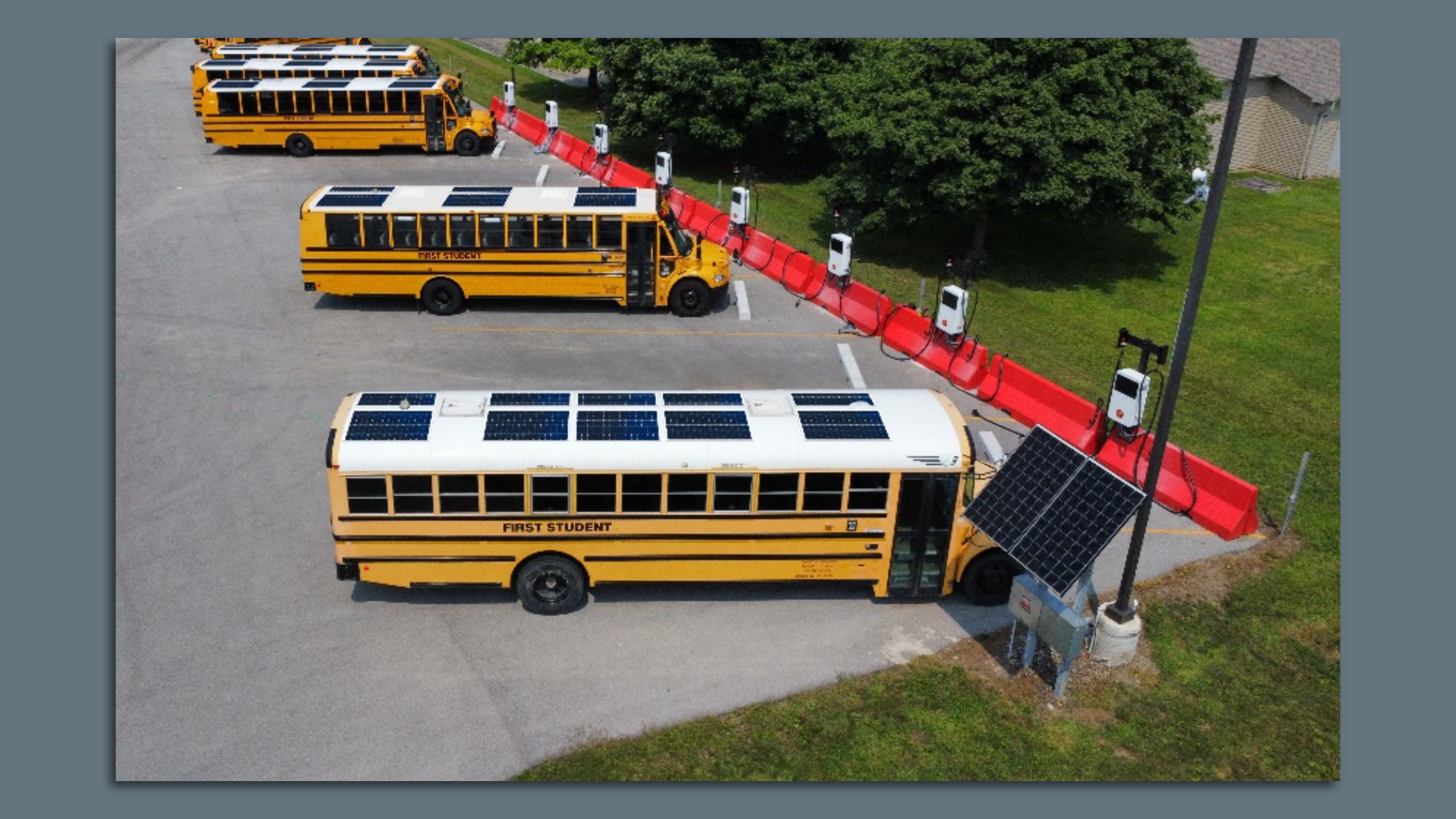
First Student's solar-powered school buses. Image courtesy of First Student
New York City's first solar-powered school buses will help to manage the city's growing demand for electricity by generating clean energy and sending it to the local grid during periods of peak demand.
Why it matters: By integrating solar buses into a smart energy hub, or microgrid, the project aims to show how electrification can work affordably even in urban areas like Brooklyn, where space is limited and demand for clean energy is high.
The big picture: As electric school buses proliferate, so has the concept of bidirectional charging, or vehicle-to-grid technology.
- With V2G, parked school buses can act as giant batteries to store surplus energy that districts can sell back to the utility when needed.
- New York is going a step further by using school buses to collect and store renewable energy from the sun.
Driving the news: The project is a joint effort between New York's utility, Con Edison, and First Student, the country's largest school bus operator and a leader in electrification.
- Twelve electric school buses are being outfitted with rooftop solar panels, replacing diesel buses at First Student's Malta Street depot in Brooklyn.
- Four of the solar buses are already in operation; the rest will be on the road by next school year.
How it works: The buses' solar panels, along with a 500-kW solar array on the rooftop of the depot facility, will be integrated into what ConEd calls a smart energy hub.
- The hub also includes a two-megawatt battery onsite to store and discharge energy as needed.
- First Student will charge the buses using low-cost charging infrastructure it designed called First Charge.
- Charging equipment is deployed above ground, mounted behind simple jersey barriers, instead of buried in underground trenches.
- That reduces construction costs by at least 30%, and is more efficient and flexible, the company says.
In summer months, when the buses are idle and energy demand soars, the hub's renewable energy can provide backup power to the grid.
- It could also support emergency services and hospitals during power outages.
What they're saying: The combination of solar power and electric school buses into a smart energy hub that supports the local grid is revolutionary, First Student CEO and President John Kenning said in a statement.
- "This demonstration project paves the way for sustainable transportation solutions that can be replicated in cities across the country, all while providing students with a cleaner, quieter, and safer ride to school."
The bottom line: Replacing diesel school buses with buses that run on renewable energy can reduce tailpipe emissions and improve kids' health.
- They might even be able to shore up the shaky electric grid.
