Axios Event: AI and the implications for U.S. defense

Add Axios as your preferred source to
see more of our stories on Google.
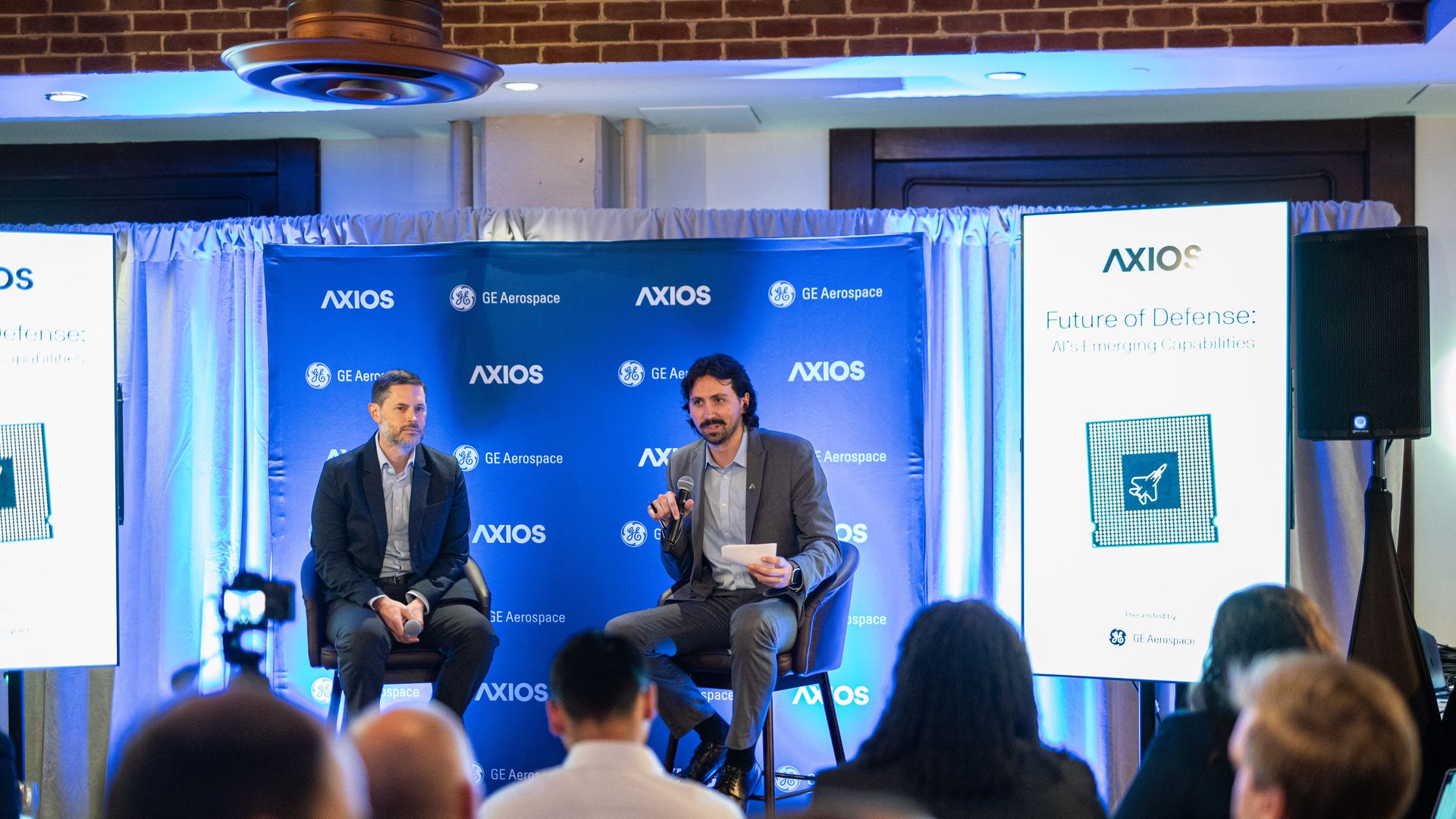
DARPA's Matt Turek on stage with Axios' Colin Demarest. Credit: Denny Henry on behalf of Axios
NATIONAL HARBOR, MD. – The rise of artificial intelligence has major implications for the future of defense as the technology could transform how militaries engage in both physical and informational combat.
- Axios Future of Defense reporter Colin Demarest moderated conversations with Primer.ai CEO Sean Moriarty and DARPA Information Innovation Office Deputy Director Matt Turek at the event, which was sponsored by GE Aerospace.
Why it matters: As AI repeatedly shows its propensity for inaccuracy, there are concerns about its applications in a high-stakes industry where even the slightest error can have massive consequences.
What they're saying: "The entire AI area is just moving super quickly and I think actually maintaining that uncertainty is really important," Turek said. He said that there are both opportunities and downsides when it comes to AI's implications for national security.
Developing AI we can eventually "bet your life on" is of utmost importance to DARPA as the agency considers the possibility of delegating tasks to machines.
- "That's part of the reason why DARPA is still in the AI space, because we don't think we're yet at the point where you can bet your life on an AI system and not have that be a foolish thing to do," Turek said.
Primer.ai CEO Sean Moriarty said he believes the Department of Defense is moving in the right direction regarding AI, but that the pace is "way too slow."
- "I believe that we are looking at and talking about the right things … But we've got to move a heck of a lot faster," Moriarty said.
Sponsored content:
In a View From the Top sponsored segment, GE Aerospace chief information officer of defense and systems Jess Salzbrun said it is the company's responsibility as a hardware manufacturer to consider how AI software will change the nature of warfare.
- "It's our noble mission to consider how into the future do we have this partnership between software and hardware, because it's not an 'either or', it's certainly a 'both and,' … and we have to aggressively go into that direction otherwise we're not going to be able to meet the demands of the warfighter," Salzbrun said.
