What's next: Curbside EV chargers powered by the sun

Add Axios as your preferred source to
see more of our stories on Google.
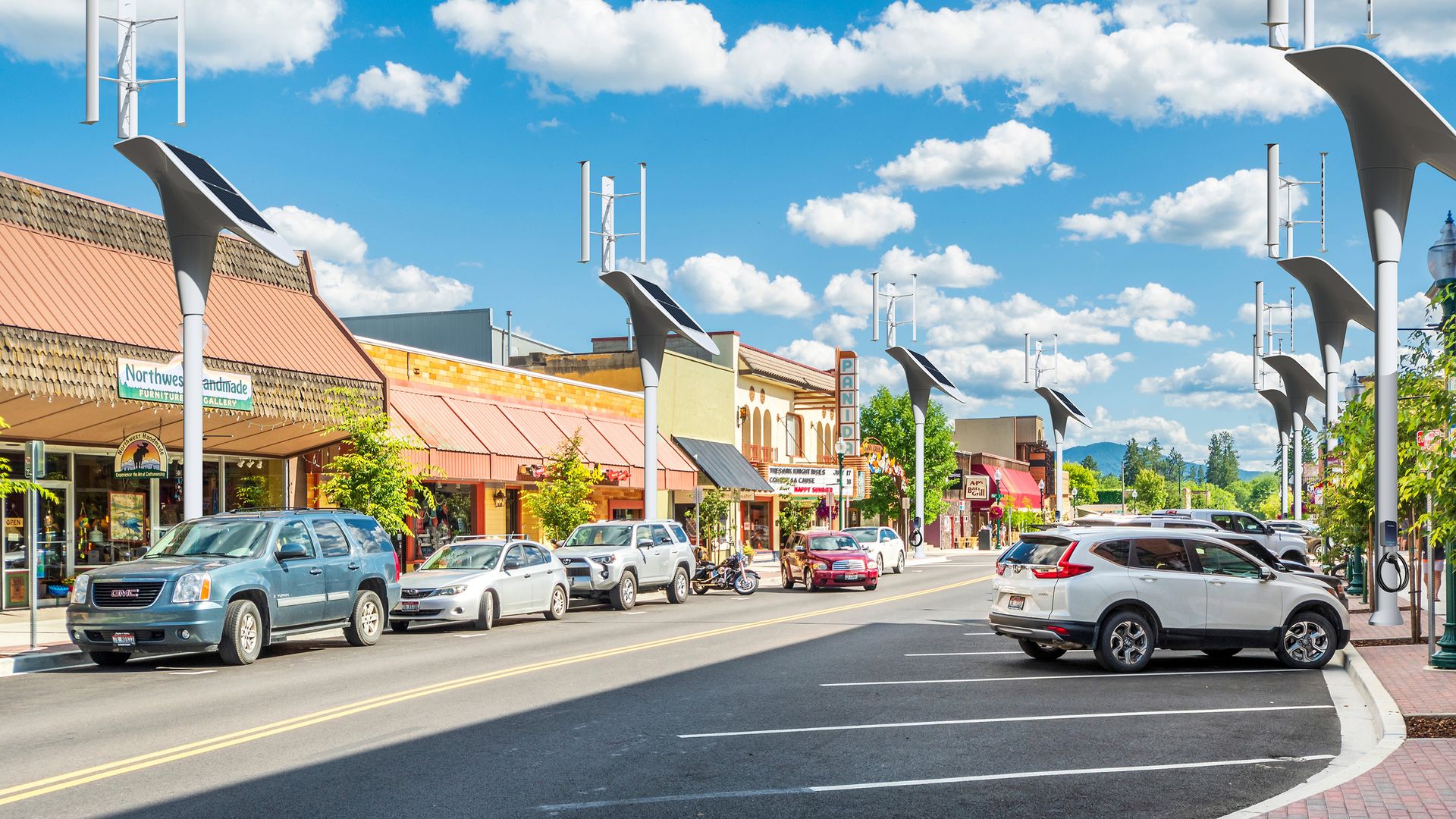
Beam Global's sun- and wind-powered curbside chargers for electric vehicles would replace street lights. Computer-generated image courtesy of Beam Global
Electric vehicle charging company Beam Global is introducing a patented streetlight-based charging system powered by wind and solar energy.
Why it matters: The company says the chargers minimize the need for disruptive construction and electrical work while providing handy access to charging in public places like apartments, shopping centers, airports and stadiums.
Yes, but: Some communities might not favor the way the 40-foot-tall towers alter the landscape.
How it works: The BeamSpot system doesn't require new or upgraded utility grid circuits, which is often the biggest — and costliest — challenge associated with installing EV charging infrastructure.
- Instead, the BeamSpot poles replace traditional streetlights, using existing foundations and grid connections.
- A 1 kw solar array and 1 kw wind turbine extending above it supplement the existing grid power by generating electricity that is stored in a 15 kwh battery inside the pole.
- The stored energy, coupled with existing grid power, are enough to illuminate the area with a high-lumens, low-energy LED light while also providing "meaningful" EV charging, Beam Global says.
Reality check: Charging speeds are very slow.
- Total EV charging power is listed at 5.76 kW, which the company says can deliver up to 220 miles of range in a day.
- That trickle speed could make sense for overnight parking at an apartment complex, but wouldn't add much energy to an EV during an hour-long shopping trip.
What they're saying: That's okay, argues Beam Global CEO Desmond Wheatley, who says it's more than enough to replenish an EV's daily range of about 30 miles.
- Ultra fast-charging stations aren't necessary in most circumstances, he says.
- "What you find is that EV drivers charge their cars like their cell phones, opportunistically," he tells Axios.
The other side: A startup called Gravity, which is also trying to solve urban charging, thinks the better way to go is a network of high-powered curbside chargers that can recharge an EV in as little as five minutes.
- Fast curbside charging is critical in urban neighborhoods where there's a shortage of parking, the company says.
The bottom line: There are multiple solutions to EV charging. The one thing everyone can agree is the U.S. needs more of it.
