VW-Rivian deal holds benefits for both automakers

Add Axios as your preferred source to
see more of our stories on Google.
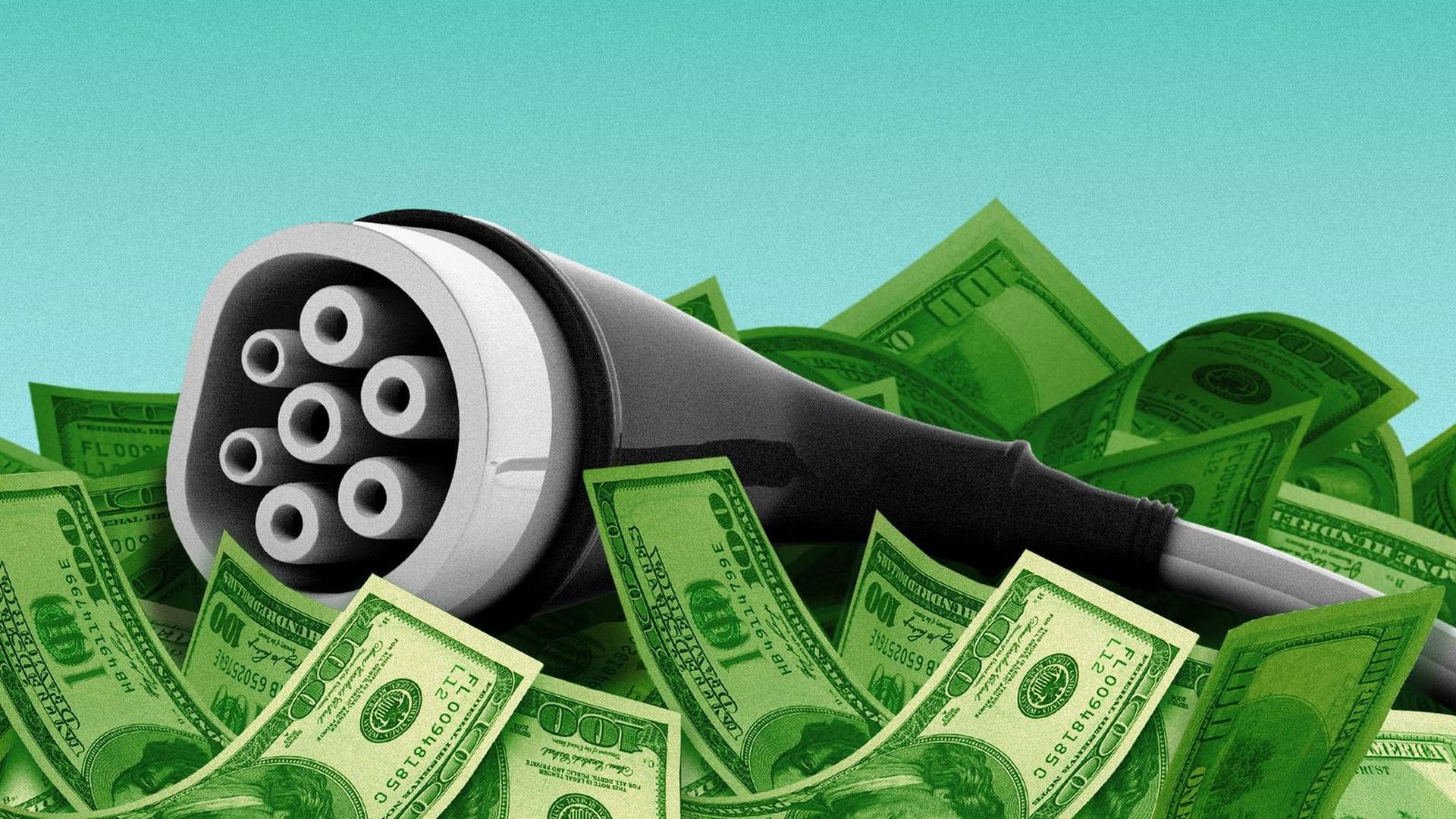
Illustration: Gabriella Turrisi/Axios
The battle for the EV future pits legacy automakers against swashbuckling (if cash-strapped) startups, but the new VW-Rivian tie-up suggests a third way forward.
Why it matters: As Axios' Nathan Bomey reports, VW's plan to invest up to $5 billion in Rivian is a major validation of Rivian's tech and an acknowledgment by VW that it's playing catchup in the global EV race.
- Rivian's stock is up 38% in pre-market trading and had climbed around 55% late Tuesday as the deal emerged.
Catch up quick: VW and Rivian said their joint venture unveiled Tuesday would create EV architecture and software that both automakers will use.
- VW plans an initial investment of $1 billion in the startup that makes SUVs and pickups for the consumer market and supplies vans to Amazon.
- They said it would help lower costs for VW, but also Rivian, which posted a $5.7 billion operating loss in fiscal 2023.
- They see near-term benefits from VW use of Rivian's systems, and they both hope to launch vehicles using tech from the JV later this decade.
The big picture: Incumbents like VW have scale and balance sheets fortified by profitable petro-powered lines, while newcomers often bring impressive tech and buzz.
- And startups need help that deep pockets provide. Consider that Fisker and Lordstown Motors collapsed, and several other new market entrants are struggling.
- "The cost of continuing to go it alone is too high and investors are less keen on EV companies than when Rivian started," University of Michigan business professor Erik Gordon tells Bloomberg.
What they're saying: Edmunds analyst Jessica Caldwell said Rivian needs capital as it struggles with the slowdown in EV demand growth.
- "Volkswagen is jumping on the opportunity to diversify its portfolio as the automotive industry hurtles toward an uncertain electric and autonomous future," she said via email.
Zoom out: The pairing also arrives amid an uncertain EV policy and market landscape.
- Donald Trump has pledged to scuttle President Biden's EV policies, while the recent EU parliamentary elections could slow the bloc's climate efforts.
- Meanwhile, Chinese EV exports to Europe and some other markets have been soaring but have yet to make real inroads in the U.S.
- The White House wants to keep it that way, recently boosting tariffs to 100%, while EU officials also plan new trade penalties.
The bottom line: This probably isn't the last incumbent-startup pairing, especially as low-cost Chinese models put pressure on U.S. and European automakers.
