Orange juice falls prey to inflation

Add Axios as your preferred source to
see more of our stories on Google.
Fruit-borne disease and extreme weather, amplified by a warming climate, are throttling orange-producing regions in Brazil and Florida — curbing harvests and driving up citrus prices.
Why it matters: Oranges, one of the fruits of choice in the U.S., are currently facing a supply crisis. It's adding to the list of everyday items impacted by inflation, which continues to frustrate consumers and color their perceptions of the economy.
Zoom in: In 2023, Brazil exported over 31% of its total orange juice production to the US — making America the second-largest export destination after Europe, which received nearly 55%, according to data from CitrusBR.
- Brazil produces roughly 70% of the global supply of orange juice. However, main orange-producing areas in Sao Paulo and Minas Gerais are estimated to drop roughly 24% from the previous year.
- If the production forecasts hold true, then this would make oranges the second smallest crop since 1988, , according to figures from Fundecitrus, a Brazilian association of citrus growers and juice manufacturers.
Catch up quick: Typically, manufacturers blend frozen orange juice from different seasons to balance flavors, but low supply have emptied stockpiles, making it difficult to maintain consistency, The Financial Times reports.
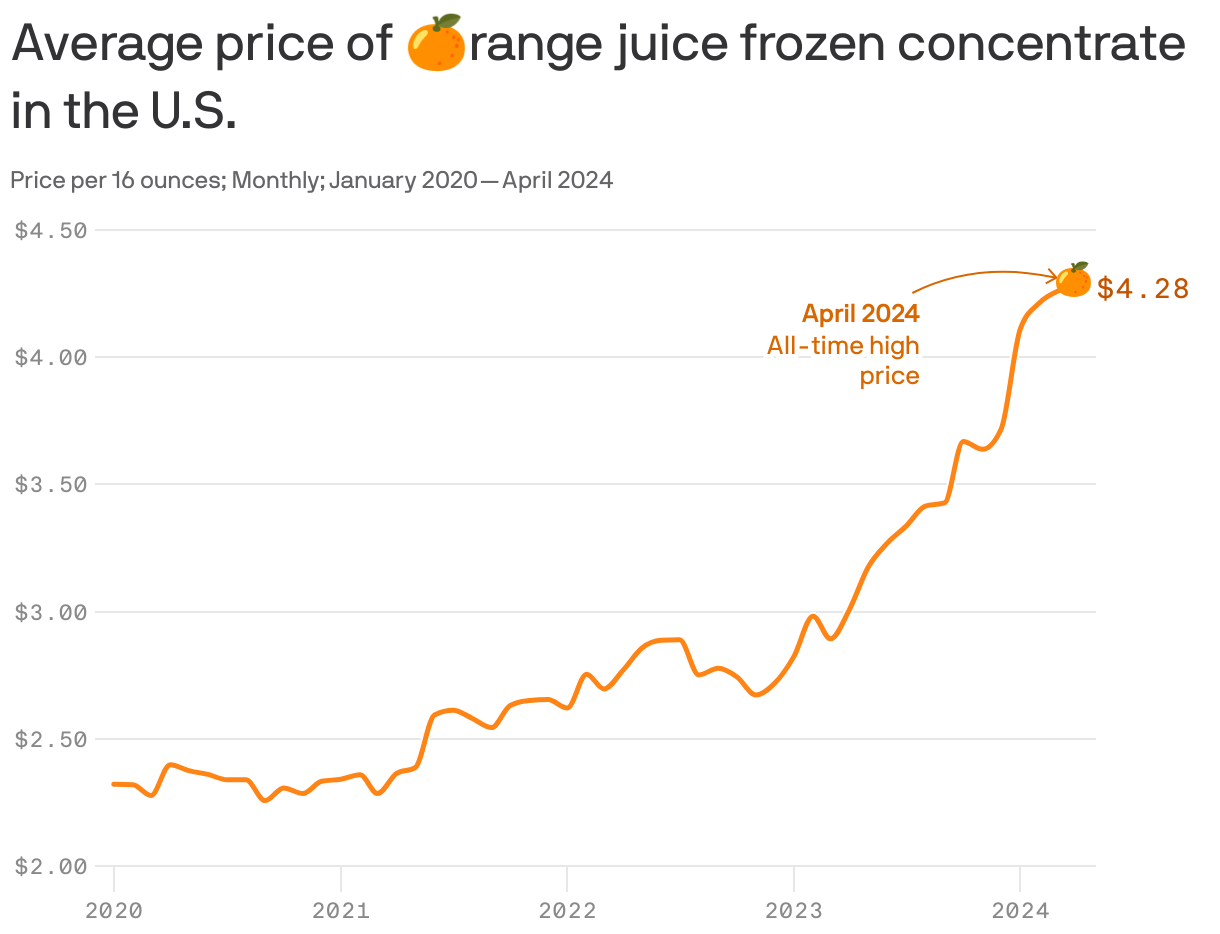
- Rising cost of orange juice frozen concentrate in the U.S. could also be a factor; average retail prices have spiked 42% to an all-time high in April, from $3.01 per 16 ounces a year ago to $4.28.
- The global price of oranges is $3.68 per pound for April this year, up from $2.76 per pound a year ago, according to the data from International Monetary Fund (IMF).
By the numbers: Florida, the nation's top citrus producer, has also seen its bearing acreage dwindle at an average rate of 3% per year since 2003.
- The U.S. Department of Agriculture (USDA) forecasts that despite the 2024 orange production in Florida forecasted at 19% higher than last year, it still remains the lowest harvest in 90 years.
- Overall, the orange production in the U.S. dropped 5% from April, according to the May forecast by USDA.
- Industry players have hedged against price swings of concentrated orange juice futures on Intercontinental Exchange in New York, which hit $4.95 a pound in on May 28 this year.
Zoom out: Oranges are falling prey to similar forces battering a wide range of commodities, which have sent global prices on a broad-based tear.
- Sugar prices are rising due to the global weather risks in major sugar producing nations of Brazil, India and Vietnam.
- Cocoa price briefly touched $10,000 in March due to number of factors including changing weather patterns in world's top cocoa producers, Côte d'Ivoire and Ghana.
- Coffee harvests suffered after extreme drought hit coffee bean harvests in Southeast Asia, especially Vietnam and Indonesia.
What they're saying: "Food prices are a very tangible way to talk about climate change," Uriyoán Colón-Ramos, an associate professor of nutrition and global health at George Washington University, tells Axios.
- "People keep wondering why the prices haven't gone down and there are a million explanations out there, but buried in there are the changing weather patterns and floods that affect crop production," she says.
What's next: Falling production is prompting juice manufacturers to explore citrus alternatives. This shift could lead to increasing quantities of other juices like pear, apple and grape.
