Go deeper: The most significant findings from the Comey FBI report

Add Axios as your preferred source to
see more of our stories on Google.
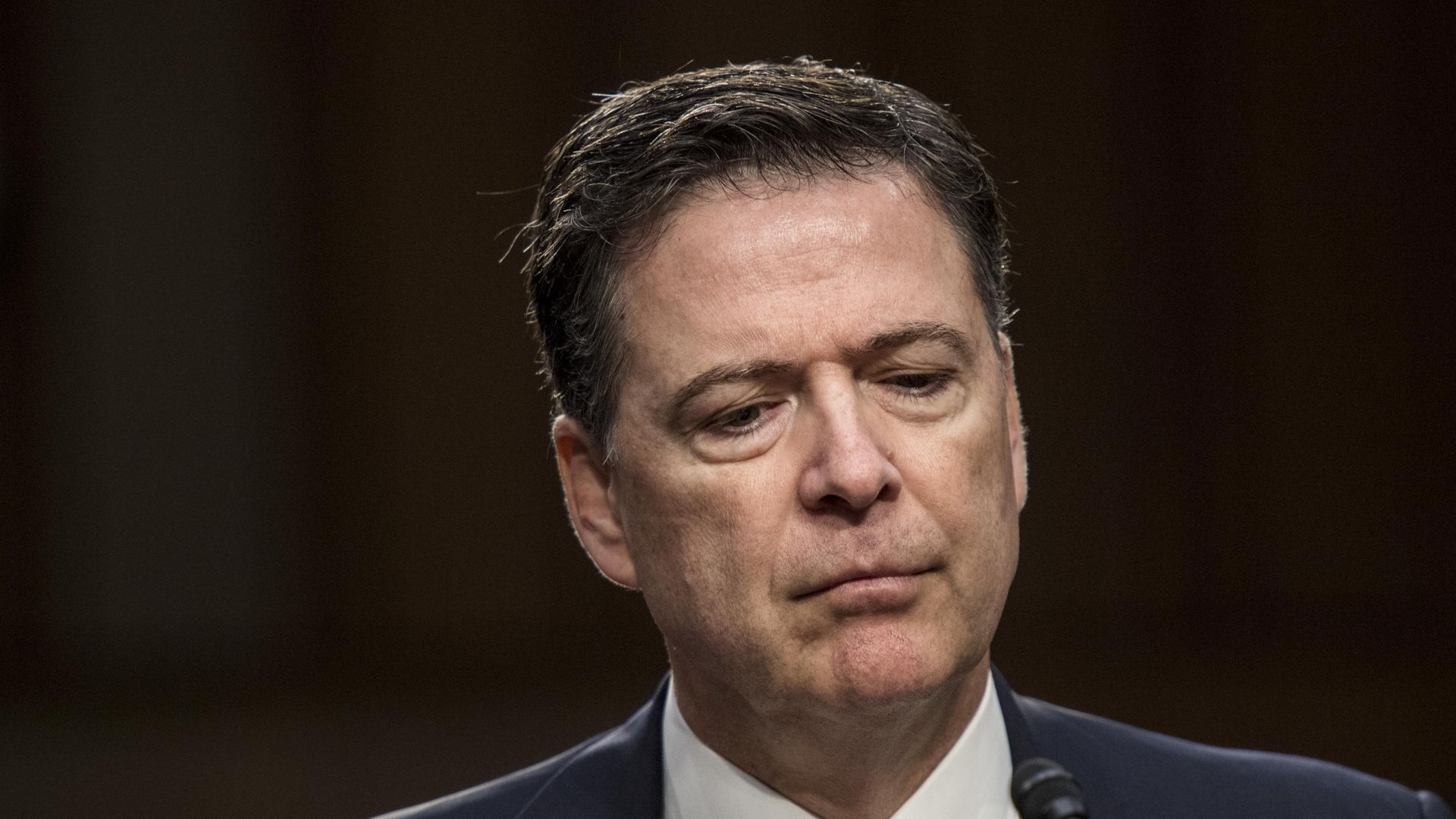
Former FBI director James Comey. (Photo by Melina Mara/The Washington Post via Getty Images)
In what the inspector general called the "highest profile investigations in the FBI’s history," the long-awaited report by the Justice Department’s office of the Inspector General goes more than 500-pages deep on the FBI's investigation, led by then-director James Comey, of Hillary Clinton's use of a private email server during her time as secretary of state.
The big picture: The conclusions drawn in the watchdog's report don't have any legal clout and did not recommend a criminal investigation. However, Horowitz stressed throughout how Comey botched the public's perception of the FBI, a nonpartisan government entity.
What you need to know:
- The investigation found Comey had no political bias in the case.
- Horowitz sayid the decision to disclose the FBI's findings on the Clinton case was "extraordinary and insubordinate for Comey to do so."
- More anti-Trump emails surfaced from FBI officials Lisa Page and Peter Strzok, who have been under scrutiny for recently reported texts against Trump, and were involved in an extra-marital affair.
- Comey used his personal email account to "conduct unclassified FBI business."
- The report highlights that the former director didn't give Attorney General Loretta Lynch notice that he was investigating Hillary Clinton's emails — a matter in which the bureau had recommend more comprehensive rules on decision-making instead of just based on principle.
Go deeper: In addition to Strzok and Page, texts were discovered from three more people that had "statements of hostility toward then candidate Trump and statements of support for candidate Clinton."
- Strzok, who helped with the Clinton email investigation, sent text messages to Page in August of 2016 assuring Page that he would stop Trump being president. Page sent, “[Trump’s] not ever going to become president, right?" He wrote "No. No he's not. We'll stop it."
- Horowitz could not find any proof the texts affected anything other than the public's perception of the FBI.
The bottom line: The 18-month investigation found "the conduct by these employees cast a cloud over the entire FBI investigation," and detailed how high-profile emails and texts distracted the public from the investigation's validity. The report managed to weave together some of the most polarizing political events of the last few years — and the spin has already begun on both sides of the political spectrum.
