Experts in Georgia emphasize disaster recovery starts long before the storm

A message from: Atlanta Gas Light
As hurricane season begins, emergency response leaders resoundingly agree: Storm preparedness isn't just about weather forecasts — it's about building trust, strengthening infrastructure and ensuring vulnerable communities aren't left behind after disaster strikes.
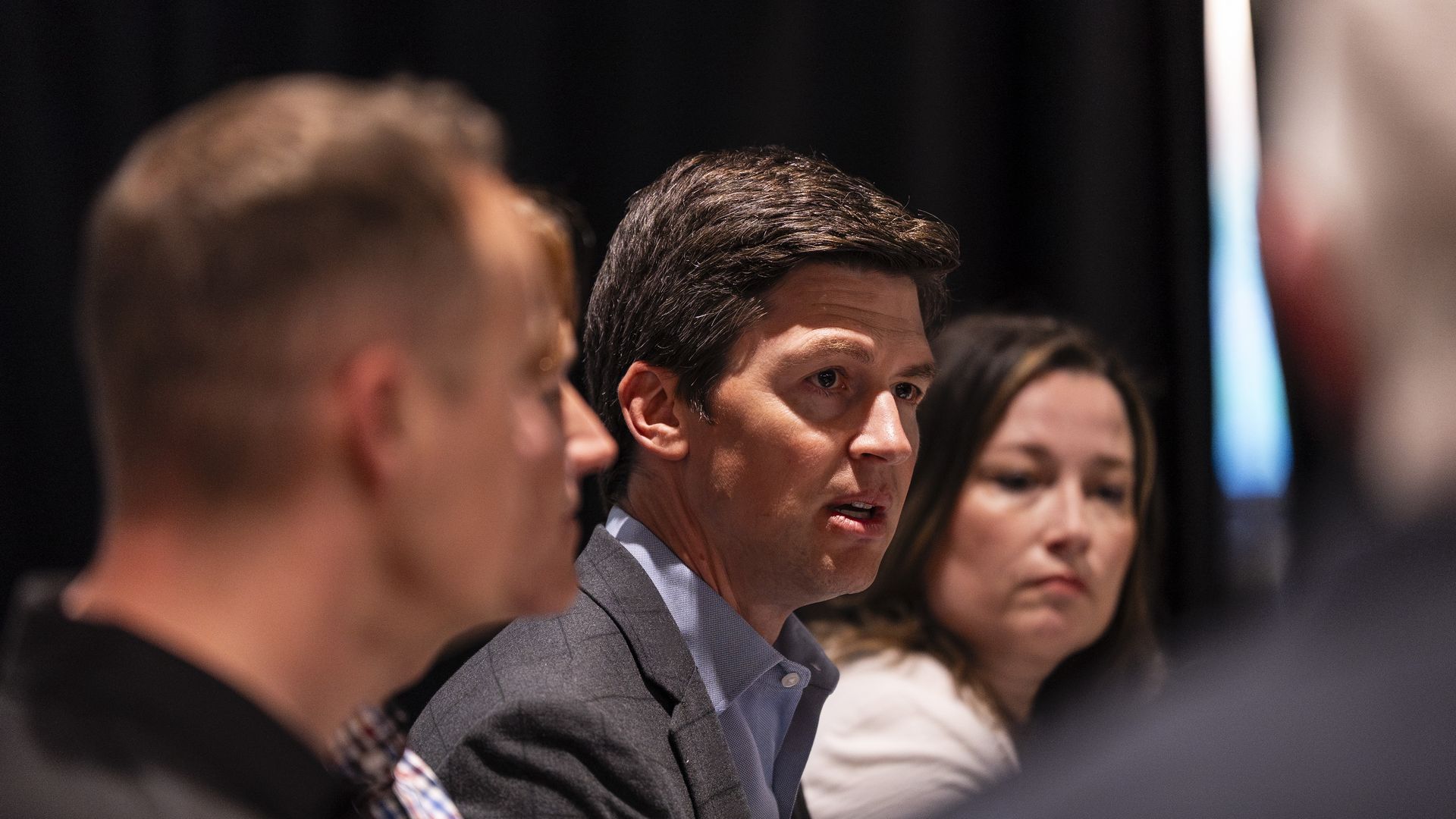
That was the focus of an Expert Voices roundtable in Atlanta on May 19, where emergency response officials, utility leaders, private businesses, nonprofits and community organizations gathered to discuss how Georgia can better prepare for increasingly severe storms and long-term recovery challenges.
- "We have to make sure people work together," said Alicia Doherty, regional executive for the American Red Cross of Georgia. "There is not one organization that can do everything in the face of a disaster."
Why it's important: Severe storms and hurricanes are becoming more disruptive, unpredictable and debilitating for Georgia communities. While Metro Atlanta has largely avoided catastrophic direct hits in recent years, experts warned that close calls can create a false sense of security.
- "We dodged a bullet," one attendee said of Hurricane Helene's impact on Atlanta. "That shouldn't give us false assurance."
The background: People in Augusta, Valdosta and parts of South Georgia are still recovering from Helene. Rural communities across South Georgia remain particularly vulnerable due to limited emergency management staffing and infrastructure. Agriculture-dependent areas can take years — or even decades — to fully recover economically after a major storm.
- At the same time, experts said recovery challenges extend far beyond restoring power or rebuilding roads. Housing instability, mental health emergencies and communication breakdowns often linger long after landfall.
An expert take: Roundtable attendees repeatedly emphasized that resilience depends on relationships built before disaster strikes.
- Communities with trusted partnerships between nonprofits, local governments, schools, utilities and businesses are often better positioned to respond quickly and recover more effectively.
- "We have to build on trust. This is work that has to be done ahead of every disaster," Doherty said. "You have to continue to show up."
That challenge can be even more acute in communities with large immigrant populations or where languages other than English are primarily spoken.
- Participants emphasized that effective disaster preparedness must be rooted in culturally responsive practices, including meaningful engagement with trusted local partners and the delivery of information in ways that reflect community languages, values and needs well before emergencies arise.
The story: Doherty shared one example from Hurricane Helene recovery efforts in a small Georgia town.
- "About a week after Helene, we drove into a town with a population of about 500," Doherty said. "Residents had gathered in a small outdoor community area where they were cooking meals and giving out supplies. We walked up and asked, 'How can we help?'"
Residents pointed the Red Cross team toward two nearby communities where cleanup efforts were underway by the residents.
- "When we arrived, there was a bit of hesitation at first," Doherty said. "But one of my executive directors is bilingual, and as soon as we were able to connect in Spanish, you could feel the difference."
Once that connection was made, conversations opened up and the team was able to better understand immediate needs. After engaging with residents, the Red Cross provided support, including food and water.
The outlook: Experts highlighted several ways Georgia communities are working to improve preparedness and coordination ahead of future disasters.
- Local emergency management teams are increasing community engagement efforts through schools, public events and preparedness education campaigns.
- Utility providers are expanding cross-agency planning exercises and scenario coordination.
The positive news: Roundtable attendees agreed that one of Georgia's biggest strengths is the coordination between infrastructure providers, utilities, municipalities and transportation systems before disasters occur.
- "One of the strengths of Atlanta — and Georgia more broadly — is how connected our business community is, even at this scale," said Walt Farrell, president and CEO of Atlanta Gas Light and Chattanooga Gas. "We have strong, established relationships across sectors, from fiber and electric providers to fellow gas companies and local municipalities, which makes collaboration much more effective."
Hurricane Helene reinforced the importance of sequencing disaster response efforts — from clearing roads and restoring safety infrastructure to repairing utility systems and supporting recovery operations.
- "Everybody understands where they fit when the disaster happens," Farrell said. "It sets us apart as a city and as a state."
The plan: Farrell highlighted the Atlanta Gas Light Foundation's support for the American Red Cross Community Adaptation Program (CAP), which works with local nonprofits to strengthen preparedness and resilience in vulnerable communities before disasters strike.
- More info: In late 2024, the Red Cross expanded CAP into Chatham County, Georgia. The Federal Emergency Management Agency's (FEMA) National Risk Index had identified Chatham County as more at risk from adverse natural disaster impacts than 99% of U.S. counties.
- With its location on the Atlantic coast, Chatham County's residents are particularly vulnerable to hurricanes and other currently intensifying natural disaster impacts like flooding and coastal erosion.
- "This is an opportunity for us to be proactive with disasters," Farrell said. "We've put $1 million into this program and are working with the American Red Cross to make sure that it filters to the right nonprofits so that we're prepared when something happens."
Attendees also pointed to advances in forecasting technology and artificial intelligence that are improving storm tracking and giving communities more time to prepare.
- The reason: Today's hurricane forecasting models are significantly more accurate than they were during disasters like Hurricane Katrina, helping emergency managers make faster and more informed decisions.
Still, experts cautioned that technology alone cannot solve preparedness gaps.
What they're saying: Serena Levy, president of the Atlanta Gas Light Foundation, said businesses must support both their employees and the communities they serve during disasters.
- "We're a business built by the community," Levy said. "Our customers and employees are the lifeblood. We are invested in where we live, work and serve."
Levy said one of the biggest lessons Atlanta Gas Light learned from recent disasters was the importance of showing up fully for employees experiencing hardship while also meeting customer and community needs.
- "We had these massive challenges for some employees," Levy said. "We were able to set up a fund where any employee that had damage to their home, their property, et cetera, could come and get help."
- The company also transformed service centers and distribution facilities into community resource hubs during disasters, distributing supplies like diapers, formula, generators and emergency materials.
- Employees from Atlanta Gas Light's sister utilities in Tennessee and Virginia traveled from across the country to support the response, expediting recovery and relieving pressure on Atlanta Gas Light employees who were working around the clock.
Plus, plus, plus: Levy noted the importance of addressing emotional and long-term recovery needs after disasters.
- "There was an increasing amount of mental health services needed. Having existing wellness benefits fast-tracked our employees' ability to receive care," she said.
Worth a mention: Business leaders also discussed the role private-sector organizations can play in long-term disaster response.
- One attendee noted home improvement retail store parking lots became critical staging and distribution sites following recent storms because they had access to water and power.
Looking ahead: Experts agreed that Georgia's preparedness efforts must continue evolving as storms become more severe and recovery challenges grow more complex.
- That includes improving communication systems, strengthening local emergency management capacity and ensuring residents understand their own role in preparedness.
The takeaway: Storm resilience is about people, partnerships and preparation.
As Georgia heads into another hurricane season, leaders say the communities best positioned to recover will be the ones investing in trust, coordination and local relationships long before the next storm arrives.