
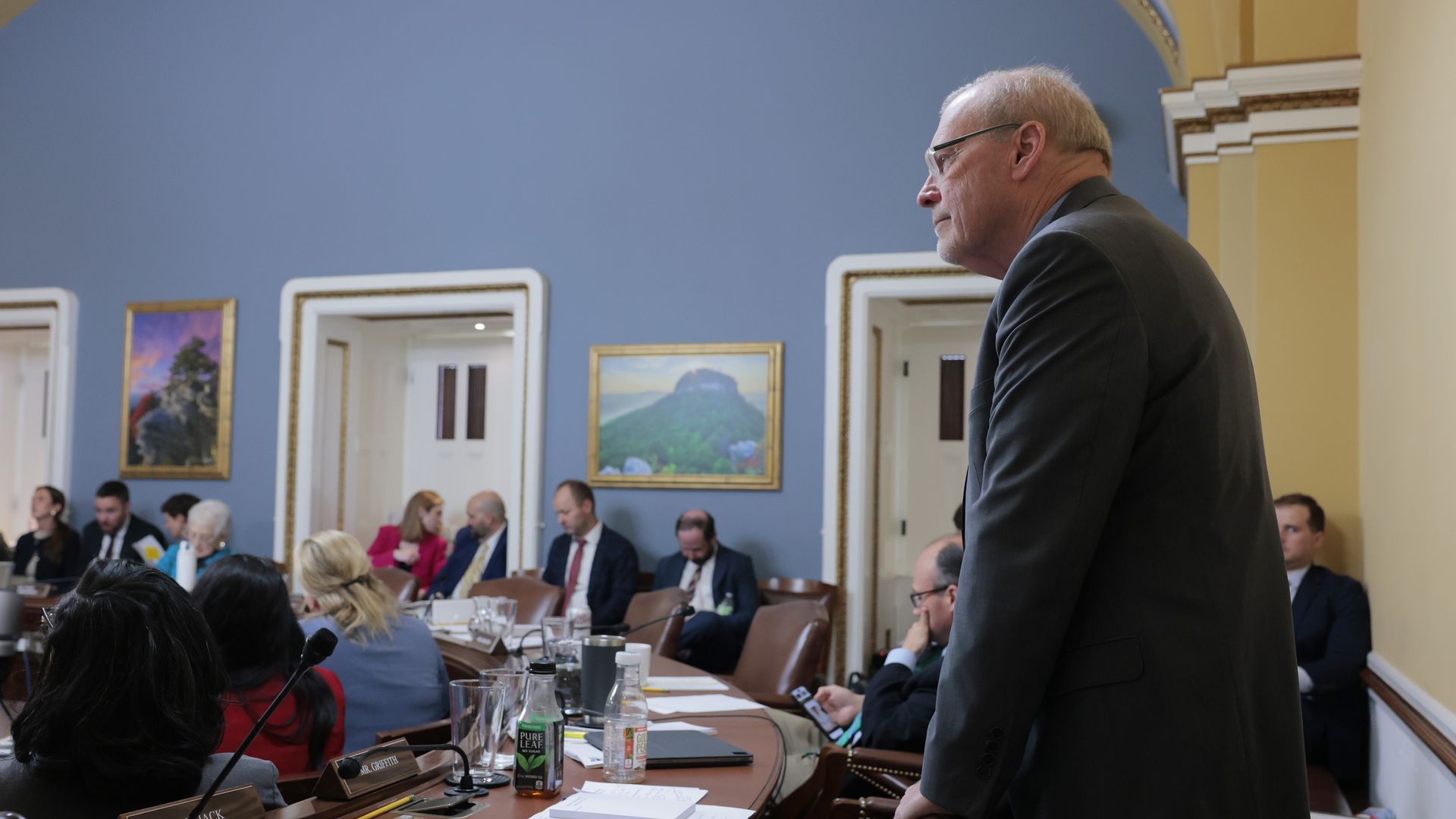
Griffith during the reconciliation debate. Photo: Anna Moneymaker / Getty Images
Republicans are reviving a push for changes to PBMs' business practices after measures aimed at the drug chain intermediaries weren't included in reconciliation.
Why it matters: Overhauling PBMs in the name of lowering drug prices has had bipartisan support, but no standalone bill has made it out of either chamber.
Driving the news: A group of House Energy and Commerce and Ways and Means members last week introduced a bipartisan PBM package that revives most of the discarded policies.
- It includes a ban on spread pricing in Medicaid and language delinking PBM compensation from the price of the drug in Medicare Part D. The package also would impose transparency measures on the companies.
State of play: New Energy and Commerce health subcommittee Chair Morgan Griffith told Axios that he "absolutely" wanted to revisit PBM reform in the committee.
- "I was working on pharmacy issues before we had any pharmacists on the committee," Griffith said, referring to former subcommittee Chair Buddy Carter, one of the most vocal critics of PBMs in Congress.
- Energy and Commerce GOP spokesperson Matt VanHyfte said the committee hopes to find a must-pass legislative package with which to move PBM legislation, adding that "we already have it pretty locked up and ready to go."
- On the Senate side, the Finance Committee is also expected to continue pressing forward under Chair Mike Crapo, who's wanted to get a PBM plan through the chamber.
Between the lines: The problem is that not many legislative vehicles are available.
- Absent a government funding deal, lawmakers may have to resort to multiple "clean" short-term CRs — especially with partisan tensions running high and Democrats not inclined to collaborate on big bills.
- Congress still has to deal with health extenders like renewing funding for community health centers, telehealth and hospital-at-home, and averting scheduled Medicaid DSH cuts by Sept. 30.
- The question is how much is too much, and whether adding PBM measures to that list could sink the underlying legislation.
The other side: PBMs continue to argue that any changes to their business practices won't actually lower drug prices and could wind up further enriching pharmaceutical companies.
- "The PBM-related policies take away optionality for health plans and hand Big Pharma an unprecedented windfall, while doing nothing to lower drug costs," said Greg Lopes, vice president for public affairs and communications at PCMA, the PBM trade association.
