Axios Future of Energy

May 20, 2026

π£ Good morning! This edition is all over the place in a good way, with news on...
- Evolving EV markets
- Corporate energy buys
- A gasoline benchmark, grid risks and more, all in 1,145 words, 4.5 minutes
π Thanks to David Nather and Chris Speckhard for editing and to our brilliant Axios visuals team.
π» Exactly five years ago, Silk Sonic ruled Billboard's R&B chart with today's impeccable intro tune...
1 big thing: A tale of two EV markets
New reports underscore how electric vehicle sales are rising globally even as they've dropped sharply in the U.S. β and how the Iran war could lead even more people to buy them.
Why it matters: EVs help displace oil use and lower emissions. Petroleum price spikes from the Iran war appear to be boosting sales in some places, too.
Driving the news: Sales of purely electric and plug-in hybrids combined are expected to grow to 23 million in 2026, representing about 28% of total sales, per the International Energy Agency.
- It would follow another yearly record in 2025.
- The 2026 rise is expected despite a slowdown in China, the largest market by far, and a U.S. decline after consumer subsidies were removed.
- IEA projects that sales in Asia Pacific countries other than China will surge over 50%, and they'll jump 45% in Latin America.
State of play: Other fresh data points show how the removal of U.S. tax credits in the 2025 budget law and other policies are changing the domestic market.
- Consumer spending on EVs plummeted in Q4 2025 after the credits lapsed, and remained flat in Q1 of 2026, per wider clean investment data out today from the research firm Rhodium Group and MIT.
- The spending is down 23% from Q1 of 2025.
The intrigue: A new β and smaller β U.S. normal for post-credit EV sales could be emerging.
- Rhodium and MIT say the flat consumer investment in Q1 could signal "stabilization" after the lapse of the credits.
- Separate data from Cox Automotive finds that new U.S. EV sales dipped again in April and were down 23% year-over-year last month.
- The firm, which tracks fully battery-powered EVs (not plug-in hybrids), finds that EVs were 5.6% of U.S. new-car sales last month.
What we're watching: There are already signs that higher fuel prices from the Iran war are lifting sales in some markets. But whether the change will last is another question.
- Timur GΓΌl, IEA's chief technology officer, told reporters that policymakers may seek "structural opportunities" to boost energy security and shield consumers from this crisis or others in the future.
- IEA sees potential for an even higher total than its current 2026 projection of 23 million EV sales globally β depending "how, when and which policies are enacted amid the current energy crisis," the report finds.
2. π§ Bonus: The rise of electric robotaxis


A lot more electric robotaxis are en route in coming years after record growth in 2025, IEA finds.
Why it matters: Autonomous ride-hailing, while still small, is a pathway for expanded use of electric transport.
- The global fleet more than doubled last year to reach 8,000 vehicles across 20 cities worldwide, mostly in the U.S. and China.
What's next: The U.S. has the most projects in the pre-commercial phase (testing and so forth).
- Further out, estimates of the global robotaxi fleet in 2035 range from 700,000 to 3 million vehicles, likely concentrated in 40 to 80 cities, IEA finds.
3. π Exclusive: Clean energy deals on track for "biggest year ever"


Corporations are poised to buy more clean energy this year than ever before, driven by the AI boom and a rush to secure expiring tax credits, according to a new report shared first with Axios.
Why it matters: The surge underscores the enduring influence of corporate demand on the clean energy market β and the resilience of cleantech investment even after President Trump rolled back federal support.
Driving the news: Companies contracted 13.4 gigawatts of clean energy capacity in the first quarter of 2026 alone, according to the Corporate Energy Buyers Association's annual report.
- That exceeds the total contracted during all of 2021.
"It's hard to imagine this won't be our biggest year ever," Rich Powell, CEO of the association, told Axios ahead of the report's release yesterday at the group's annual gathering in Seattle.
Reality check: The first half of 2026 may prove unusually strong because developers are racing to qualify projects for expiring wind and solar tax credits under Trump's One Big, Beautiful Bill Act.
- To qualify, projects must either begin construction by July 4 or enter operation by the end of 2027.
What we're watching: Powell said growth is expected to continue even after those deadlines, increasingly driven by what the industry calls "clean, firm" power β including advanced nuclear, geothermal and natural gas paired with carbon capture.
- Contracting for those technologies in the first quarter alone is already nearing the total "clean, firm" power for all of 2025, Powell said.

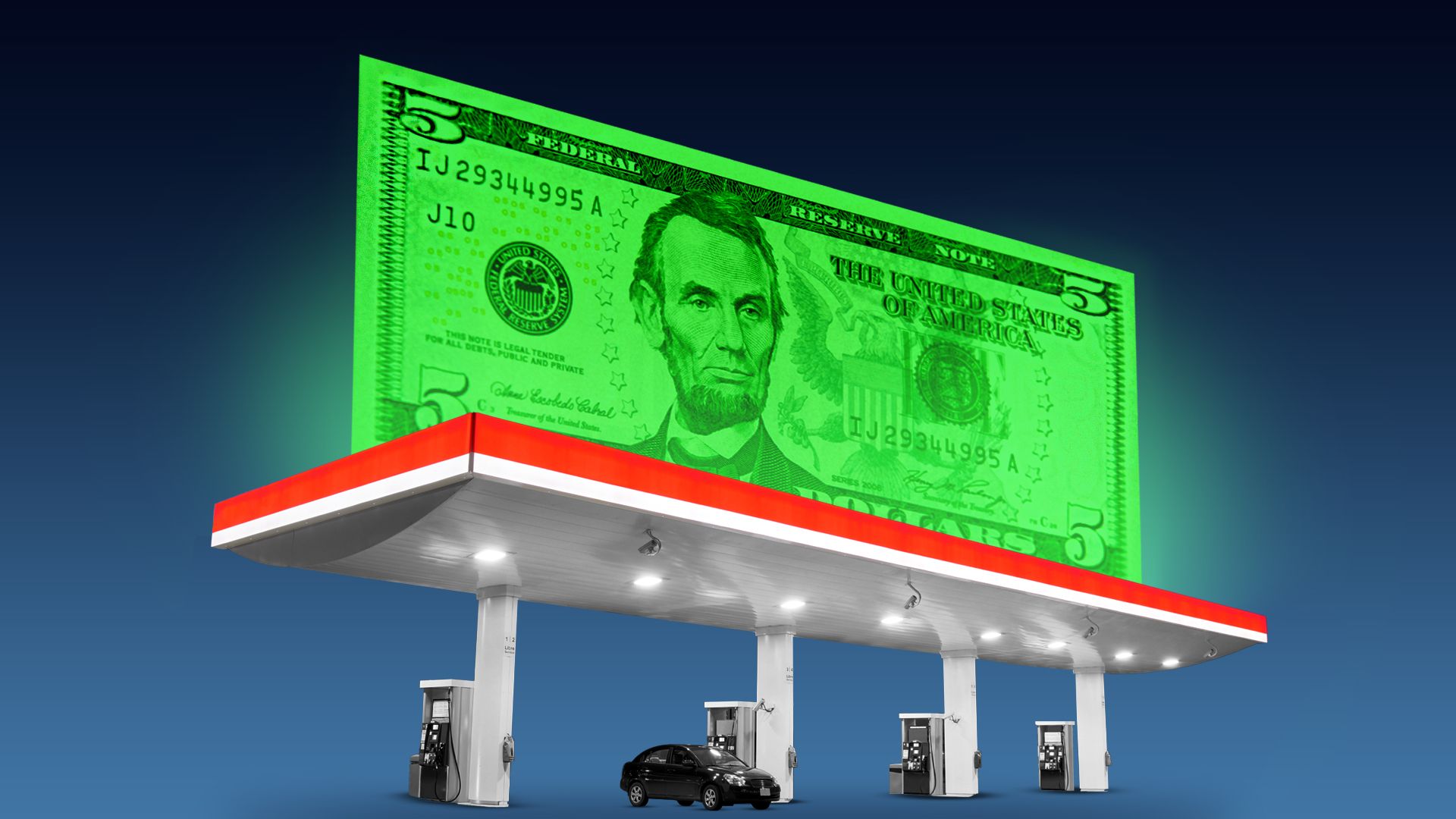
4. π΅ All 50 states top $4 a gallon for gasoline
All 50 states have average gas prices above $4 a gallon, AAA said today, with seven now topping $5 a gallon.
Why it matters: As the war with Iran approaches the three-month mark, soaring fuel prices are costing Americans millions of dollars a day, crushing small business profits, and driving a surge in inflation.
Driving the news: The national average now stands at $4.56 a gallon, AAA said.
- California is the nation's high, at $6.15 per gallon, while Georgia is the lowest at $4.01 a gallon.
- The average price of a gallon of gas is up 53% since the war started.
5. π Catch up quick: Grid risks and gas taxes
π A major grid monitor offered rare good news on reliability risks this summer β but warned against complacency.
- Why it matters: The combo of rising demand, aging infrastructure, and extreme weather is straining U.S. grids.
- Driving the news: The North American Electric Reliability Corporation's new outlook finds that peak demand is rising, with risks of supply shortfalls in small areas. NERC works with regulators to set reliability standards.
- Yes, but: Large loads β which often means data centers β are coming online more slowly than expected.
- The big picture: The outlook has improved, but reliability threats remain and are evolving. NERC's John Moura told reporters that the improved summer conditions should not obscure wider threats.
- The bottom line: "Risk is increasing, especially during periods that historically received less attention during the shoulder periods, fall and springtime, but even more increasingly in the winter," said Moura, NERC's head of reliability assessments and performance analysis.
β½ Via Bloomberg, the Trump administration is working with Congress on a fuel tax suspension plan that "provides relief without provoking a run on gasoline supplies, while also preventing other unintended consequences."
6. π₯‘ Quote of the day: Gas and the gig economy
"People tell us that some of the strategies they had been using to bring in extra income to cover monthly expenses β like driving for ride-sharing services or doing delivery work β no longer make economic sense once you factor in the cost of gas."β Anna Paulson, president and CEO of the Federal Reserve Bank of Philadelphia, in remarks yesterday
π« Did a friend send you this newsletter? Welcome, please sign up.
Sign up for Axios Future of Energy