Axios Future

October 24, 2020
Welcome to Axios Future, where I know how to vote early in New York today, thanks to this great guide from Axios.
- If you haven't subscribed, please do so here.
- Send feedback and tips to [email protected].
Monday on “Axios on HBO”: Rep. Ilhan Omar says that every Cabinet seat should be filled by a progressive Democrat, if Biden wins. (clip)
- Catch the full interview and much more at 11:16 pm ET/PT on all HBO platforms.
Today's Smart Brevity count: 1,813 words or about 6 minutes.
1 big thing: America's poor health is jeopardizing its future
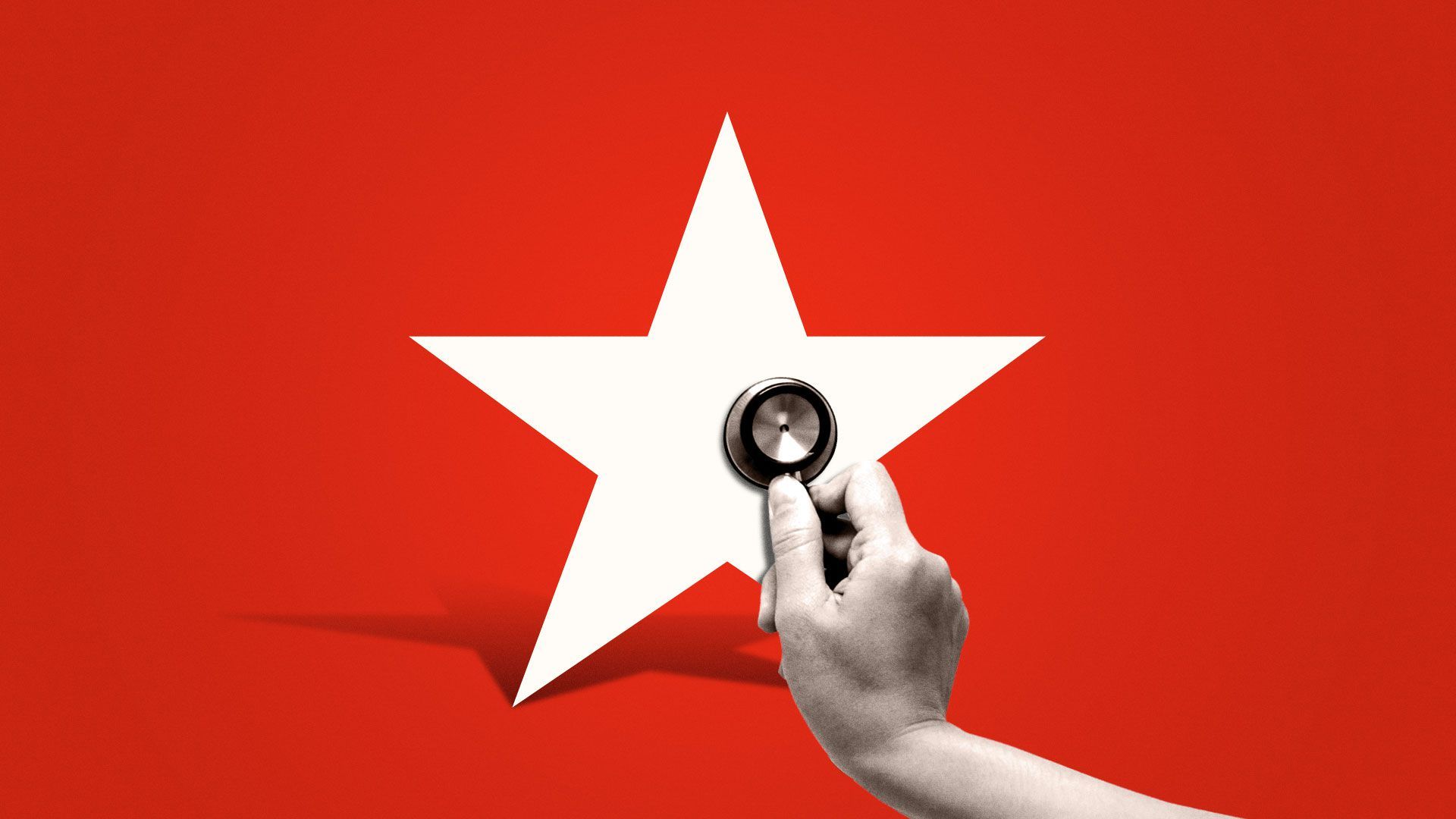
Illustration: Eniola Odetunde/Axios
From high levels of obesity and opioid addiction to inequities in access to care, America's pre-existing conditions make the country an easy target for COVID-19 and future pandemics that could cripple the United States for decades to come.
Why it matters: COVID-19 won't be the last infectious disease pandemic the U.S. faces, and one of the best ways the country can prepare for future threats — and boost its economy — is to improve Americans' overall health.
What's happening: An analysis published this week by researchers at Columbia University's National Center for Disaster Preparedness found at least 130,000 of America's 212,000 COVID-19 deaths so far would have been avoidable had the U.S. response been in line with that of other wealthy countries.
- That failure is even more glaring when you consider that just last year the U.S. was ranked as the country most prepared for a pandemic, according to the Global Health Security Index.
What that index didn't take into account — and what has compounded months of governmental failures — is that even before COVID-19 arrived on its shores, the U.S. was an unusually sick country for its level of wealth and development.
By the numbers: That much was shown by the Global Burden of Disease project, a massive database of what kills and sickens people around the world, which published its latest figures for 2019 in The Lancet last week.
- Mortality for mothers and children under 5 is 6.5 per 1,000 live births in the U.S., compared to 4.9 for other wealthy countries.
- Healthy life expectancy — the number of years people can expect to live without disability — is 65.5 years in the U.S., more than two decades fewer than in Japan.
- 65,700 Americans died of drug overdoses in 2019, more than double the number in 2010. Those deaths account for more than half of all drug overdose fatalities worldwide and held down life expectancy in the U.S.
- High blood pressure, obesity and metabolic disorders are all on the rise in the U.S.
Context: Lancet Editor-in-Chief Richard Horton has called COVID-19 a "syndemic" — a synergistic epidemic of a new and deadly infectious disease and numerous underlying health problems. The U.S. is squarely in the heart of that syndemic.
- A study published in August found cardiovascular disease can double a patient's risk of dying from COVID-19, while diabetics — who number more than 30 million in the U.S. — are 1.5 times more likely to die.
- All in all, more than 40% of American adults have a pre-existing health condition that puts them at higher risk of severe COVID-19.
- Those conditions are particularly prevalent in minority communities with unequal health care access that have disproportionately suffered from COVID-19.
Be smart: Improving overall public health is an investment worth making.
- A report from McKinsey earlier this month estimated that poor health costs the U.S. economy about $3.2 trillion a year, but by deploying existing approaches to improve health and prevent disease, the U.S. could cut its disease burden by one-third by 2040.
- For every $1 invested in targeting population health, the U.S. stands to gain almost $4 in economic benefit, and altogether health improvements could add up to a 10% boost to U.S. GDP by 2040.
Without dedicated interventions, the overall U.S. disease burden is expected to increase by 20% as an older population becomes more vulnerable to age- and lifestyle-related diseases.
The bottom line: There is no excuse for the way the U.S. has mishandled COVID-19, but the seeds of this catastrophe were planted well before the novel coronavirus arrived on American shores.
2. How movement spread COVID-19
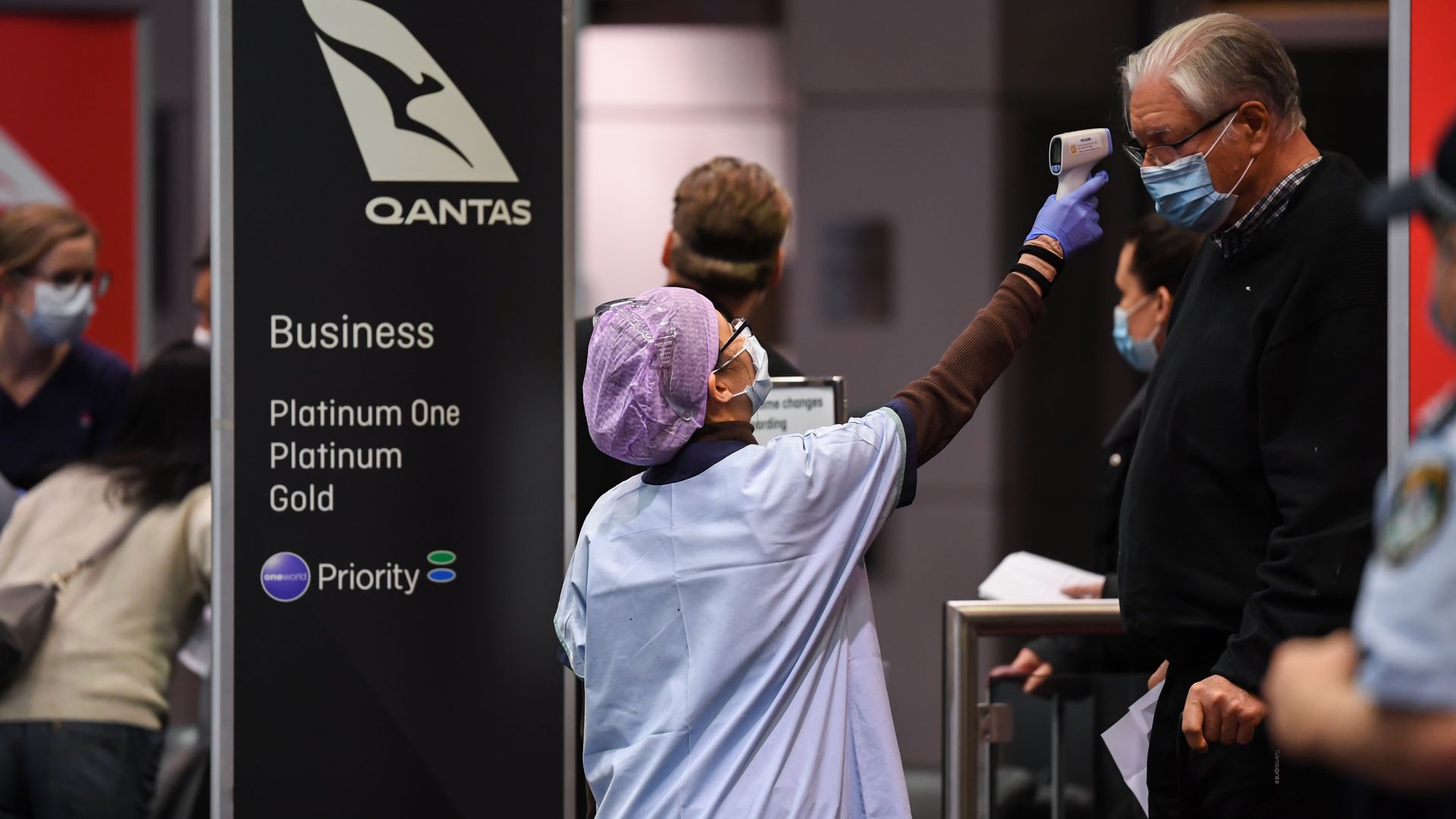
A nurse checks the temperature of a passenger arriving in Sydney airport. Photo: James D. Morgan/Getty Images
A recent study found countries with certain international travel restrictions have suffered fewer COVID-19 deaths.
Why it matters: Before the novel coronavirus, most experts believed border closures weren't effective in slowing the spread of a pandemic. But it's become clear that addressing how people move is key to controlling a disease, even if closures come with serious costs.
What's happening: Researchers in Germany studied the effect of entry bans and mandatory quarantines on COVID-19 mortality, and found the earlier such measures were implemented, the greater the effect they had on limiting deaths.
- Countries that put in place travel restrictions in early March had morality rates 62% less than countries that implemented them after mid-March, or not at all.
Of note: The study found mandatory quarantines for incoming travelers were more effective than outright entry bans, largely because such bans often exempted citizens and permanent residents, while quarantines usually applied to everyone.
- That was the case with the U.S. ban on travel from China, which was applied a month after China first reported COVID-19 outbreaks and which exempted citizens and permanent residents.
- The U.S. lost track of at least 1,600 people flying in from China in just the first few days after the ban went into effect, according to reporting from the AP.
- Border controls are of little use if governments don't track and quarantine travelers coming from infected areas.
Between the lines: Travel within a country — which is much harder to restrict than international movement — clearly spread the virus as well.
- A recent paper from researchers at New York University found "urban flight" — people fleeing large cities that hosted some of the first major outbreaks of the novel coronavirus — led to greater COVID-19 case growth in the regions they arrived in.
The bottom line: A virus only moves with its host. One lesson we should learn for future pandemics is that restricting that movement is key to controlling a new pathogen, even though the costs of such controls will only grow in a globalized world.
3. Using AI to unlock the genetic secrets of food

Illustration: Sarah Grillo/Axios
A startup is employing machine learning to identify what it calls the "dark matter of nutrition."
Why it matters: More than 99% of phytonutrients — the natural chemicals produced by plants — are unknown to science. If we can illuminate that dark matter, we can identify and cultivate compounds in foods for specific health value.
How it works: The startup Brightseed uses a proprietary AI platform called Forager to predict the likelihood that plants will have useful natural compounds and the likelihood that those phytonutrients will have specific health benefits.
- The platform is trained on a vast library of biomedical and plant research. That allows the AI to make connections between plant ingredients and health effects far faster than any human scientist could alone.
- "It effectively works as a Google search engine for these compounds and what they can do," says Jim Flatt, Brightseed's CEO. "Once we've found those compounds, we can develop products and services around them."
Details: The Forager system can screen by specific chemical compound, or by health benefit, searching for ingredients that might affect cholesterol or cognitive function.
- Earlier this year Brightseed announced a partnership with Danone North America to use the Forager system on soy.
- It's a sign that even one of the most heavily used plants on Earth may have additional nutritional secrets that AI can help tease out.
What they're saying: "AI allows us to tackle things that would have taken far too long in the past computationally," says Flatt.
The bottom line: As exciting as the possibility of using biotechnology to synthesize entirely new compounds is, we've only begun to understand what already exists in the world — and AI can accelerate those discoveries.
4. New AI tool for predicting Alzheimer's disease
A new AI model is able to predict future onset of Alzheimer's disease around seven years in advance of diagnosis using short speech tests, according to a new study published in The Lancet eClinicalMedicine, my Axios colleague Caitlin Owens writes.
The big picture: There's still no treatment for Alzheimer's, meaning that there could be limited real-world demand by patients for such a tool today. But it could also be valuable for recruiting patients for clinical trials for potential treatments.
Details: The model, developed by IBM Research and Pfizer, analyzed speech samples provided by the Framingham Heart Study, a long-term study that has been tracking thousands of people since 1948.
- The samples were collected before the subjects began showing signs of cognitive impairment. Researchers then trained AI algorithms to correctly predict the eventual onset of Alzheimer’s disease in healthy participants.
- "The production of speech is an intensely cognitive task," IBM's Ajay Royyuru, vice president of Healthcare Research, told Axios.
Why it matters: "It's not yet part of any clinical assessment that anybody does, but it could become part of what you do with some frequency," Royyuru said.
- He also said that this kind of tool could be used to recruit patients who are in the right stage of the disease for clinical trials, which could help increase the odds of finding an Alzheimer's drug that works.
- "Early interventions can only be effectively tested and implemented if the population that stands to benefit can be identified," the study's authors write.
5. Worthy of your time
Humanity is stuck in short-term thinking. Here’s how we escape. (Richard Fisher — MIT Tech Review)
- The case for expanding our horizons well beyond the present day, in an opening essay for the magazine's special issue on long-term thinking, all of which is worth checking out.
When learning pods came to Greenbrier Elementary (Dan Kois — Slate)
- A deeply sad and telling story about how a Charlottesville school that prided itself on its diversity segregated itself under the pressures of remote learning.
The mystery of the immaculate concussion (Julia Ioffe — GQ)
- An investigative piece that reads like a thriller about a CIA agent in Russia who may have been a victim of a mysterious sonic weapon. If his story is true, it could change the nature of warfare.
Why the future of the office has been put on hold (Rani Molla — Recode)
- Far from installing futuristic temperature checks and plastic dividers, most employers are choosing to wait out COVID-19, leaving everything in a holding pattern.
6. 1 slightly scary thing: The murder hornets are here
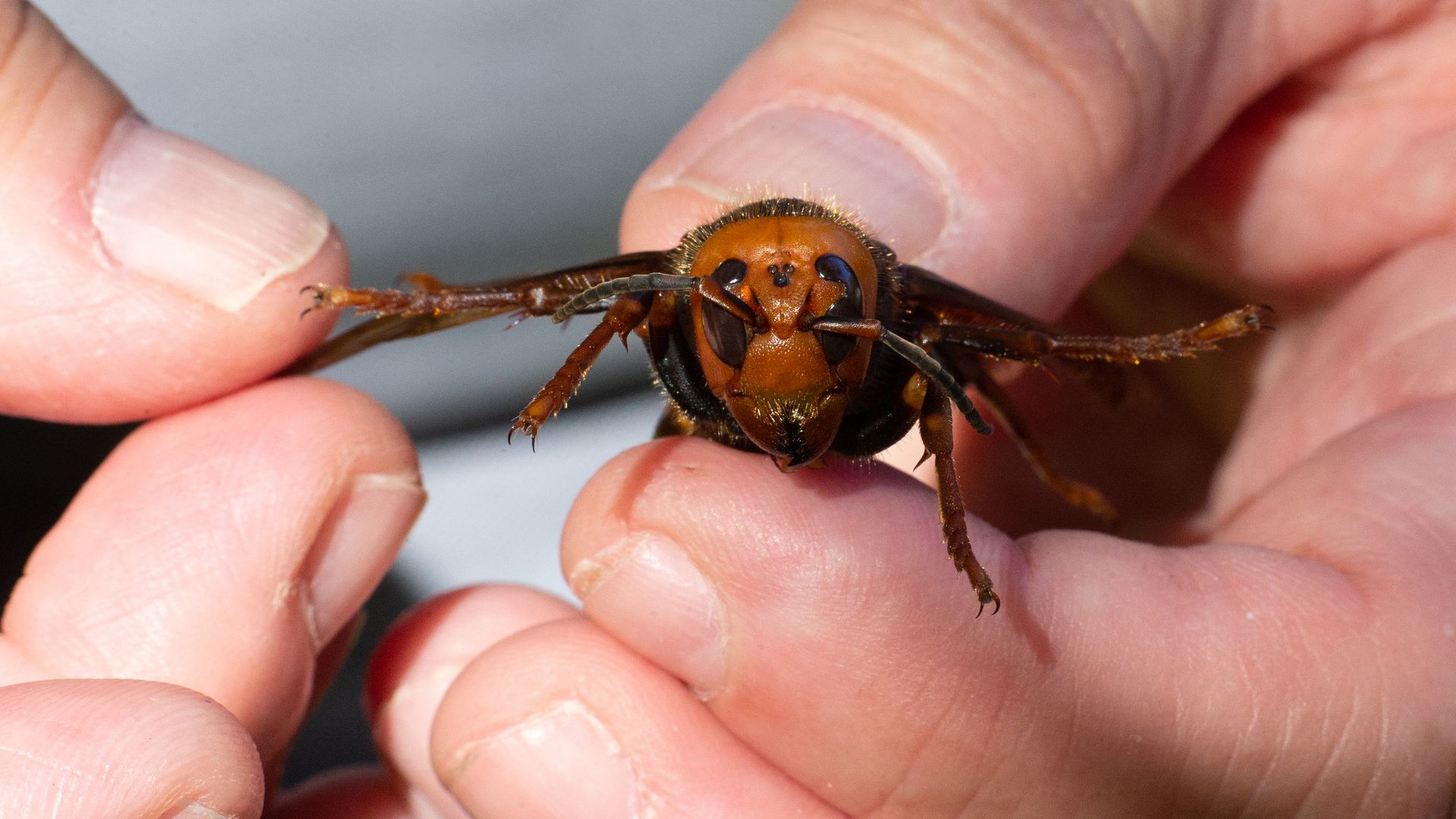
A braver man than me holds a speciment of the Asian giant hornet. Photo: Karen Ducey/Getty Images
Entomologists in Washington state on Thursday discovered the first Asian giant hornet nest in the U.S.
Why it matters: You may know this insect species by its nom de guerre: "the murder hornet." While the threat they pose to human beings has been overstated, the invading hornets could decimate local honeybee populations if they establish themselves.
How it works: The giant hornets, which are native to east Asia, grow as long as two inches and use spiked mandibles to decapitate honeybees.
- They have also been known to attack animals and human beings using a stinger long enough to puncture a beekeeper's protective suit and venom that the New York Times described as "hot metal driving into their skin."
- In Japan they‘re known to kill people occasionally, though in fairness to the murder hornets, the insects are also considered a tasty delicacy themselves in some parts of the country.
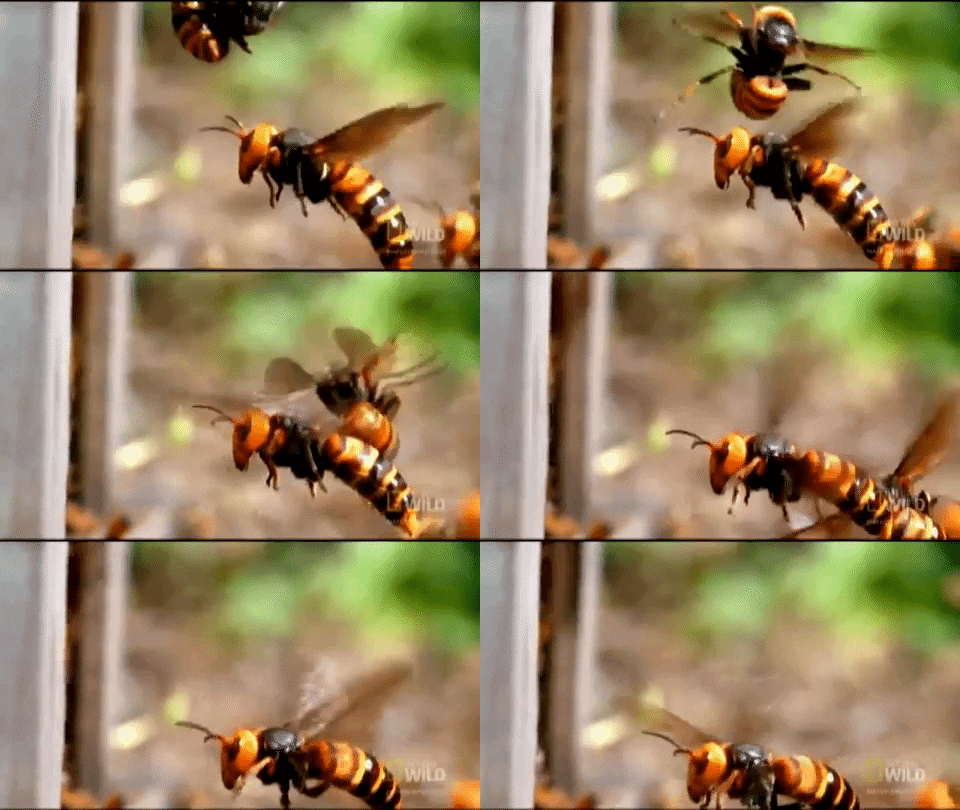
Background: Last year beekeepers in Washington began reporting sightings of the hornet, prompting scientists to begin tracking the insects.
- On Wednesday, entomologists at the Washington State Department of Agriculture (WSDA) captured two live giant hornets that had been caught in a trap. They attached radio trackers to the insects, one of which led them back to a nest in a tree in the town of Blaine the following day.
What's next: The WSDA had planned to eliminate the nest on Friday, but had to postpone the eradication until today because of inclement weather.
- Far be it from me to tell the WSDA how to do their jobs, but maybe it's worth braving a little rain to wipe out a nest of invasive murdering insects.
The bottom line: Somehow this didn't come up in Thursday's presidential debate, but I think we can all agree on a blanket ban for all invasive species with "murder" in their name.
Sign up for Axios Future

Spot the mega-trends impacting our world