Ben Folds comes back to Raleigh to raise money for music education

Add Axios as your preferred source to
see more of our stories on Google.
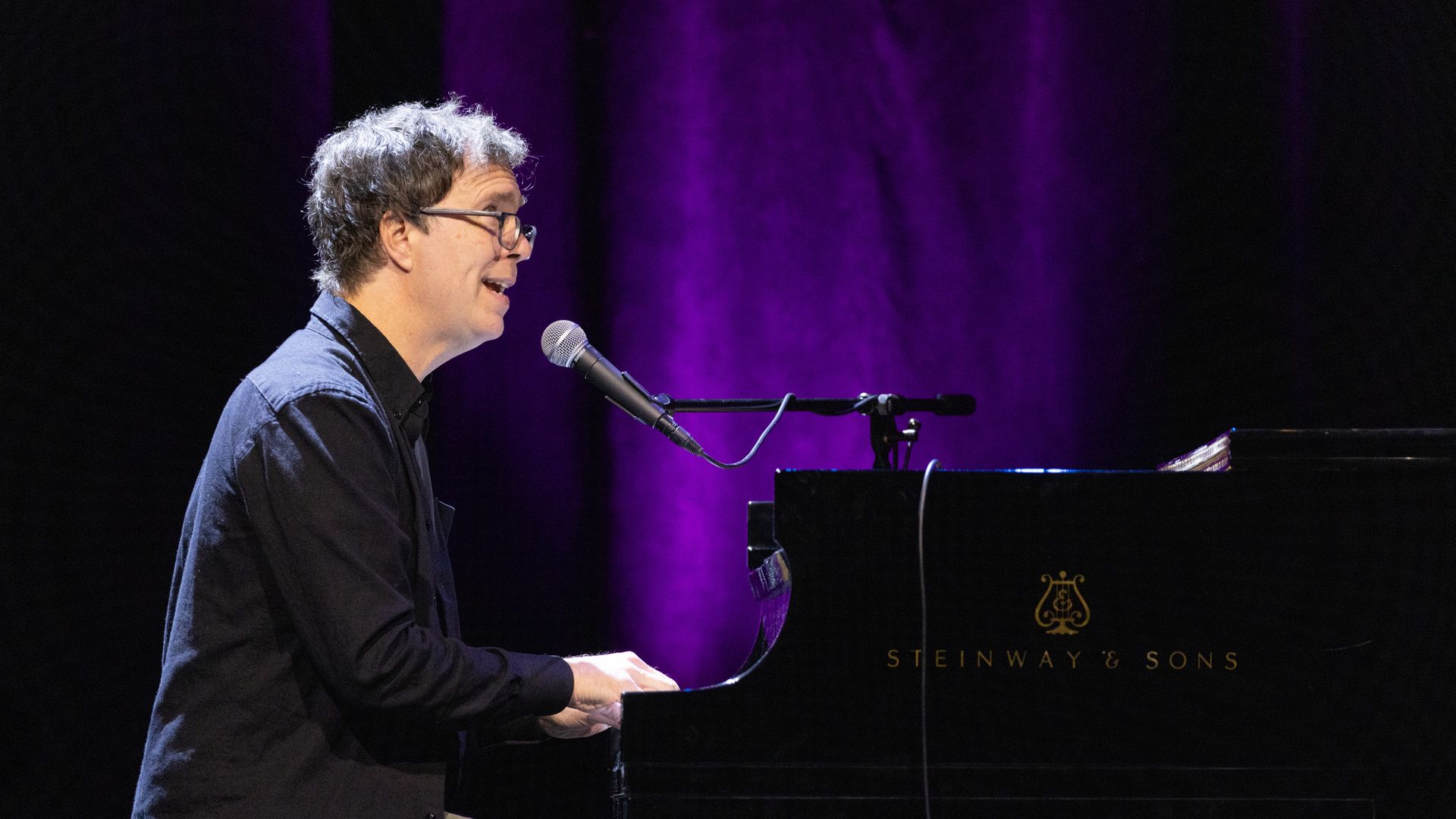
Ben Folds performs in Austin, Texas, in 2024. Photo: Rick Kern/Getty Images
Ben Folds was 8 years old and living in Winston-Salem when he first sat down at a piano for lessons.
Why it matters: The moment would change the course of his life.
- Folds went on to become one of the standout talents to emerge from Chapel Hill's influential indie music scene in the 1990s, gaining international recognition with Ben Folds Five and as a solo artist.
Driving the news: Folds is back in Raleigh this week, playing a benefit concert at the Martin Marietta Center for the Performing Arts on Saturday.
- The concert is raising money for Keys for Kids, Folds' nonprofit that helps pay for piano lessons for children throughout North Carolina, hopefully giving more kids the opportunity he had to fall in love with the instrument.
Axios chatted with Folds over the phone ahead of his concert this Saturday. This Q&A has been edited for length and clarity.
Why did you start Keys for Kids in 2022?
- You know, it was to give back, as the cliche goes. I had a lot of opportunities [growing up] and those opportunities were in no small part because of a lot of adults that I'll never know about, who chipped in and made things happen, so that my upbringing could have access to art and music.
- That access and those opportunities are decreasing for kids, and everyone just has to chip in where they can.
Why is it important to get musical instruments into the hands of kids?
- It's different for every kid. Some kids really just don't want to play music, but their exposure to it is every bit as important to their development as basketball was for mine. I'm glad I played some basketball, some baseball, some football [at school]. But I'm also glad I had art in school.
- Exposure to music is a brain-forming developmental thing, and you don't want to skip on that any more than you'd want to skip on vitamin C.
What did you feel when you first started playing the piano?
- It was my obsession and it was something I was good at, which was nice because I didn't really feel like I was good at a lot of other stuff. And as I got better at music, I found I was good at other stuff, too. A lot of that's confidence, but [music] gave me a place.
- When you grow up with some music in your life, it's just happier, you know. There are kids who'll be like, "I don't want to do that stuff." But they look back on it and go, "Oh man, I'm glad I have [a musical skill]."
What was in the air in Chapel Hill during the '90s that made it such an influential music scene?
- Someone could study that. There were places across the country in that era that were just scenes, and I don't really know how they popped up. But all of these bands lived within blocks of the Ben Folds Five house [on Isley Street], like Squirrel Nut Zippers, Archers of Loaf, Zen Frisbee, Superchunk, and so many others.
- Everyone was shuffling bands. Someone would be in one band and then another. Someone would have a falling out, and then two guys would be joining another band. It was very competitive. I can't say that we all supported each other.
- I think my band was probably fairly outcast sort of group. We didn't have a guitar in it. It was a little suspicious, like where'd they get the money for that piano. The answer is that the collection agency is knocking on my door and can't find me because I am hiding in the bathroom.
How can people get involved in music education in North Carolina?
- You know what we're doing with [Keys for Kids] is giving donations to existing nonprofits [like Community Music School in Raleigh] who are already doing a great job and just needed a little help. When you donate to Keys for Kids, it's going absolutely straight into those systems, avoids us completely, and we don't enforce any rules on them.
- And you know, I tell parents this all the time, when they ask me what they can do. If you used to play music when you were a kid, go to the school and say, I'd like to share my instrument, or come in and talk to them. If I'd had a parent that came to school, said, "Yeah, I used to [play] the bagpipes," and then blasted the room with bagpipes, I'd have been pretty excited about that.