February 15, 2024

Presidents Day break is almost here! And here's a look at how the House and Senate are divided over reforming PBM business practices and may be unable to settle their differences before a key March deadline.
📆 Reminder: We'll be on a reduced publishing schedule during recess next week, but we'll use the break to give you something deeply reported and worth your time.
1 big thing: House and Senate split on PBM reforms
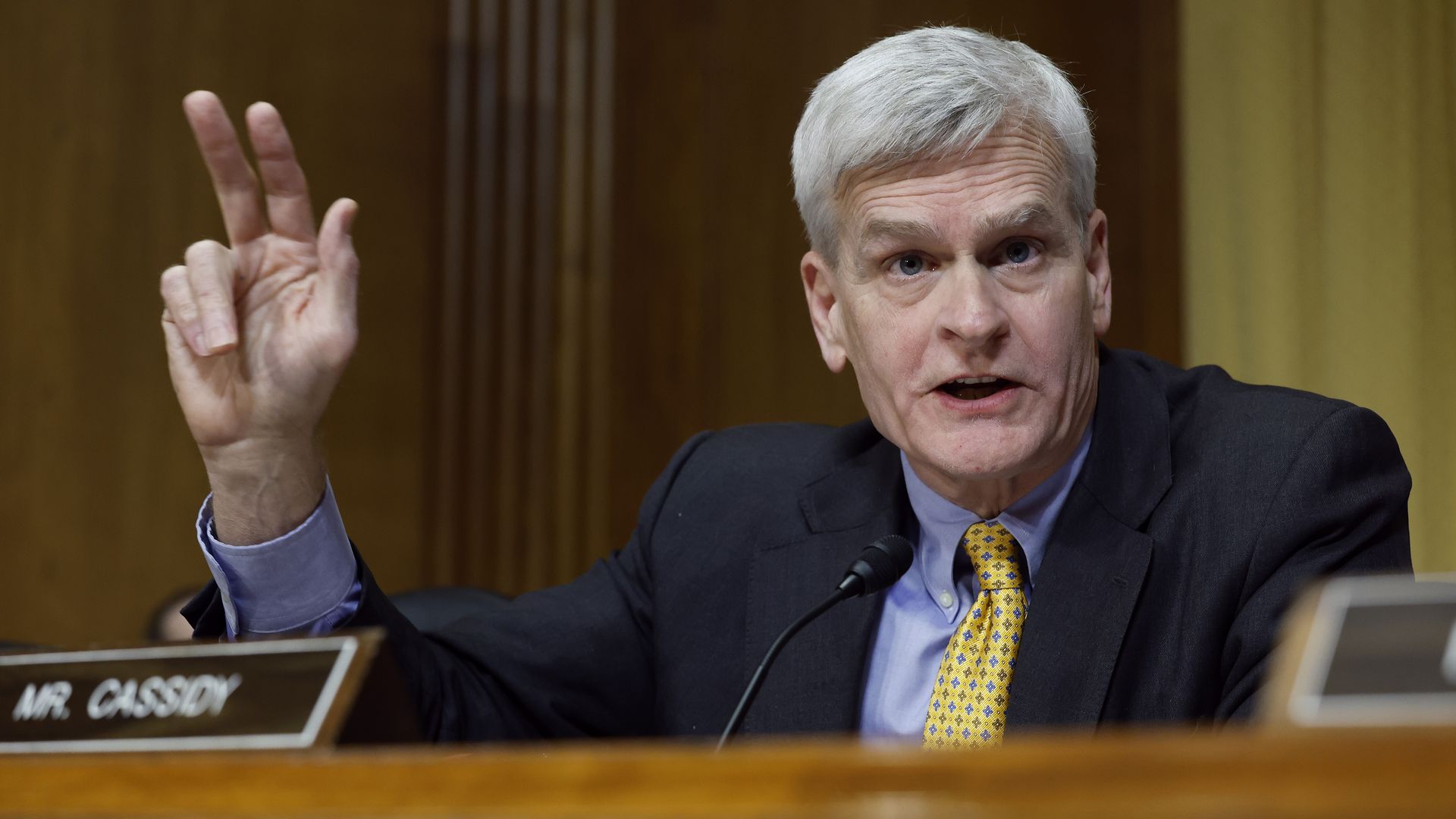
Sen. Bill Cassidy wants PBM changes to apply to the commercial market. Photo: Chip Somodevilla/Getty Images
A House-Senate split on regulating PBM business practices is threatening prospects for a reform package as time runs out for deciding what can hitch a ride on the next government funding deal, Peter reports.
Why it matters: While almost everyone in Congress wants to take action on PBMs to address drug costs, the chambers are divided on whether policy changes should apply to the commercial market or just federal health programs.
Driving the news: Senate HELP Committee Ranking Member Bill Cassidy is pushing for the PBM legislation that the panel advanced last year that would, among other things, require PBMs to pass on 100% of the rebates they negotiate to commercial health plans or employers, according to congressional aides and lobbyists.
- But those sources say House Republicans generally feel that those commercial market moves go too far, and want to limit the scope to Medicare and Medicaid.
- Bridging that gap could be difficult as a March 8 deadline looms for a possible government funding package with health care attachments.
The big picture: House-passed PBM transparency, and a ban on "spread pricing" in Medicaid so PBMs can't charge payers more than they pay a pharmacy for a drug, are seen as some of the lower-hanging fruit for negotiators.
- Lawmakers still could also agree on other Medicare and Medicaid-related provisions, like those in a Senate Finance Committee bill that the committee unanimously advanced in November.
- But changes that apply to the commercial market are more controversial, especially "delinking," or moving PBMs' pay to a flat fee instead of being based on the price of a drug.
What they're saying: "The HELP committee's legislation creates a contracting mandate in the commercial market that takes away employers' flexibility to design pharmacy benefits that meet the needs of patients," said Greg Lopes, a spokesperson for the PBM trade group PCMA.
- He said it's important to give employers choice to lower costs.
Yes, but: While the House as a whole is less eager to take on the commercial market, some members certainly want to go there.
- "I will assure you that my goal is to get it in the commercial market," Rep. Buddy Carter, one of the industry's most vocal foes, told Axios yesterday when asked about the House-Senate divide.
- Asked about the chances for PBM legislation overall in the March package, Carter replied: "We've been assured that it's going to be considered ... so I'm expecting it to be [included]."
2. Bill of the week: Hospital-at-home care

Illustration: Maura Losch/Axios
Sens. Marco Rubio and Tom Carper want to expand Medicare hospital-at-home care to patients on "observation status," who need to be assessed before they're transferred to skilled nursing facilities or cleared for other treatment.
Why it matters: The At HOME Services Act is part of the pandemic-fueled push for more decentralized care that supporters say could free up more hospital beds and improve patient outcomes.
- It would build on CMS' Acute Hospital Care at Home program, which allows hospitals to apply for waivers to be reimbursed the same amount by Medicare to provide 24/7 services in patients' homes.
- Chilmark has projected the hospital-at-home market could grow to $300 billion before the end of this decade as more tech and health care companies build out services for a growing patient base.
The details: The legislation would create a pilot program to expand the effort beyond acute hospital-level care.
- It's intended for those patients who are now required to stay in a hospital solely to meet the 36-hour observation requirement needed before they can be admitted, transferred to other settings or discharged.
- The observation period would instead occur at the patient's home, aided by remote patient monitoring and telehealth visits.
- Carper sponsored legislation in 2022 that extended hospital-at-home services for acute care for two years beyond the end of the public health emergency.
What they're saying: "The pandemic taught us that meeting patients where they're at is possible and often preferred," Carper said. "The At HOME Services Act would build on these programs to continue reducing costs and improving patient outcomes."
What we're watching: Whether the narrow proposal finds a home in a government funding agreement or some other must-pass package.
✅ Thank you for reading Axios Pro Policy, and thanks to editor Adriel Bettelheim and copy editor Steven Patrick.
- Do you know someone who needs this newsletter? Have them sign up here.
View archive