Axios Communicators

May 21, 2026

☀️ Welcome back to Axios Communicators — this week led by Sona Iliffe-Moon, chief communications officer at Yahoo.
- Today she dives into how humans can win in the AI era, plus a Hollywood dispatch from Jonathan Anderson's Dior Cruise show.
⛵️ Axios House is returning to Cannes Lions this summer, this time bigger than ever.
- Speakers this year include Reddit CEO Steve Huffman, New York Times CEO Meredith Kopit Levien, Rachel Zoe, Alex Rodríguez, and Gotham Chopra. Sign up for event and programming updates.
Situational awareness: FGS Global named Justin Dini as partner and global co-head of its strategy and reputation offering.
- He previously served as executive vice president and chief communications officer at Paramount Global. Go deeper.
This edition of Axios Communicators, edited by Christine Wang and copy edited by Patricia Guadalupe, is 1,151 words, 4.5 minutes.
1 big thing: The race to be more human
Authenticity has always been the foundation of how brands build trust. But in an era where AI-generated content is everywhere, overly polished material has become generic and often mistrusted.
- With AI use becoming table stakes, flawless copy, optimized messaging, and perfectly structured content are no longer differentiators.
Why it matters: The new edge is things AI can't commoditize, like original voice, taste, and genuine human connection. As more content and communication get automated, showing up in person carries more weight than ever.
Look at where communicators are putting their chips. IRL is back, and brands are showing up across the spectrum from SXSW and Coachella to Semafor World Economy, HumanX, and the Axios AI+ Summit.
- Ironically, the main stage is almost beside the point. The real action is in the surround sound of dinners, activations, and hallway conversations that wrap around the main show. These are intentional investments in something that doesn't traditionally scale.
What they're saying: "Algorithms changed our lives so rapidly — and we assumed for the better. But it turns out we need friction," Josh Rosenberg, CEO and co-founder of Day One Agency, told me. He works with clients such as e.l.f. Beauty, Chipotle, American Express, Sephora, and Nike.
- "The more fake, confusing, and uninspiring our feeds get, the more we want to look elsewhere. Showing up in person, and away from the screen, can be the antidote," he said.
- "Authentically activating in real life gives brands the chance to develop genuine fans and build loyalty. Doing so takes time and effort — friction —but it earns undivided and sustained attention, which is the ultimate win."
The same instinct is showing up on the content side. As AI tools became embedded into everyday workflows, Yahoo vice president of internal communications Sarah Smith developed a bespoke style guide designed to preserve the company's distinct voice, cadence, and executive authenticity — rather than defaulting to a standardized corporate tone.
- The shift comes as audiences, particularly younger ones, are pushing back on overly polished "millennial corporate copy" and gravitating toward communication that feels more conversational, specific, and human.
- AI accelerates the drafting; the guide preserves the judgment and personality that keep Yahoo's communication from becoming interchangeable with everyone else's.
Between the lines: You'd never describe the best communicator you know as someone who writes the best press releases.
- AI fluency is the new version of that: necessary, but never enough. The best communicators of this era won't just be prompt engineers. They'll be interesting and interested — people who learn from culture, from leadership and employees, and from being present in the world around them.
- The communicators who win will bring taste, judgment, creativity, connection, and genuine curiosity wherever they show up.
The bottom line: Once everyone masters the same tools, the only moat is something genuinely yours. The race to be more human is one that communicators are poised to win.
👗 Bonus: Experience of a lifetime
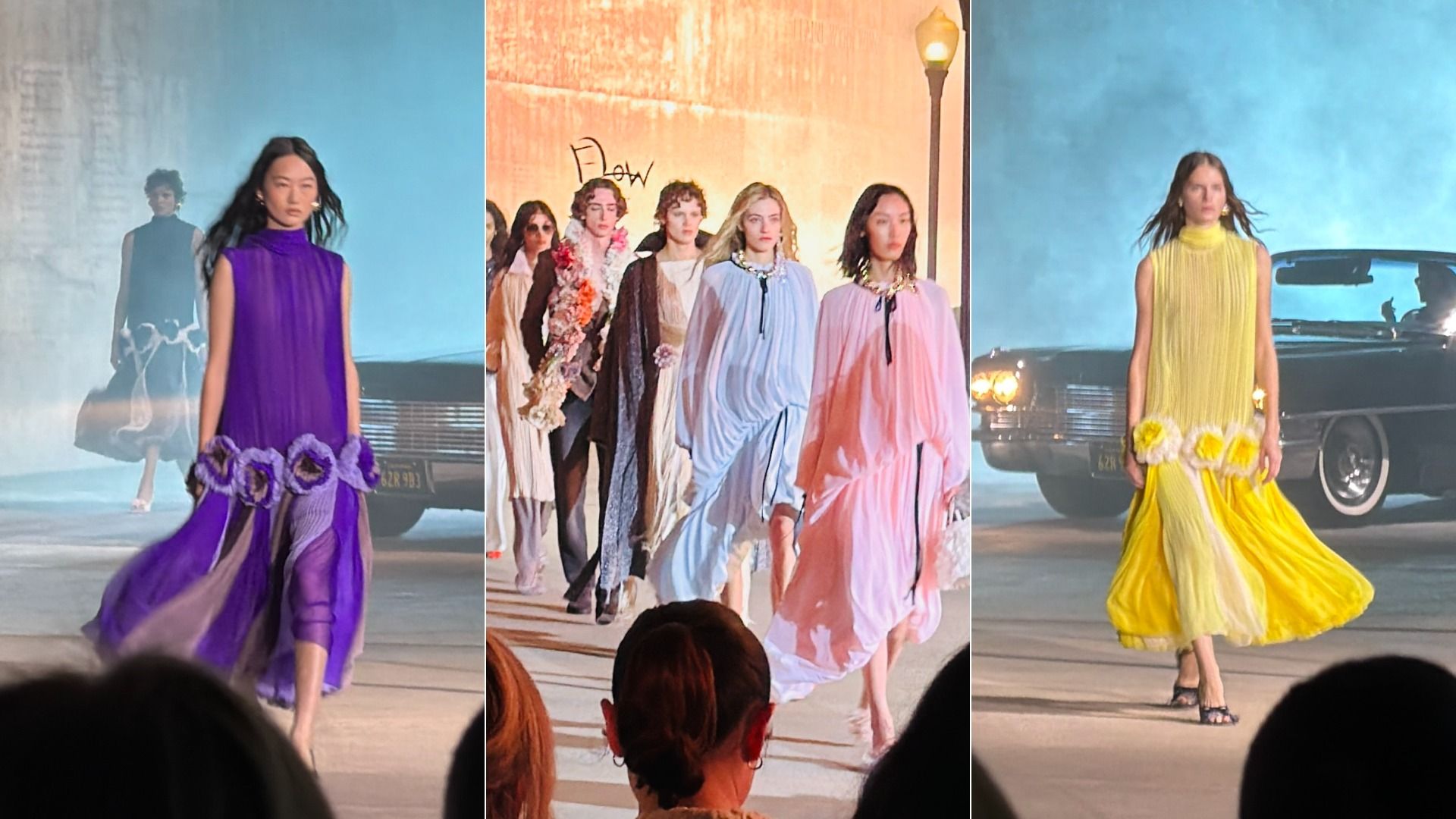
As a lifelong fashion lover — someone who grew up wanting to be a designer as much as a diplomat — attending Jonathan Anderson's first Dior Cruise show last Wednesday at the LACMA's new David Geffen Gallery was a bucket list moment.
The big picture: Anderson shared his take on AI in a recent interview, which translates directly to where communicators find themselves today:
- "I think AI will make the hand of the designer more valuable. What is made by hand will always have a scarcity to it — it involves a brain-to-hand process, which is very complex. In the end, we want to connect to things emotionally."

Behind the scenes: About 400 people were there. Intimate in the space but everywhere by morning — amplified through the voices of every tastemaker present. The kind of night that reminds you why showing up in person still matters.
- In an action-packed 20 minutes, every detail told a story. From show notes styled as a film script to lamplit alleys, vintage Cadillacs, looks inspired by everything from California poppies to newspaper print, and dramatic lights and shadows playing off the brutalist runway, while tunes from John Lee Hooker, Air, and Linda Scott filled the air.
- Anderson's fascination with Hitchcock's "Stage Fright" and Marlene Dietrich's famous ultimatum to wear Dior haute couture on set — "No Dior, No Dietrich" — ran through everything. Craft referencing craft.
The bottom line: If Anderson can distill a house's entire identity into 20 immersive minutes, communicators can ask themselves the same questions designers answer every season: What's the experience only your brand can create? What's the room that only you can put together? What's the story that requires your specific brain and experience to tell it?
- The brain-to-hand process — the judgment, the instinct, the earned point of view — is exactly what can't be automated. That's always been the communicator's edge, and some things never go out of style.
2. 📚 Reading list
🔍 Google is reinventing search, upending its own core business amid an existential threat from AI chatbots, Axios' Ina Fried writes. It's also an acknowledgment that describing what you're looking for in conversational language is a better way to find information than guessing the right keywords. (Axios)
👀 Reputation management firm Terakeet posted positive content about Goldman Sachs general counsel Kathryn Ruemmler in an effort to be above negative content about her association with Jeffrey Epstein. (New York Times)
- Ruemmler declined to comment to the Times. Terakeet co-founder and CEO Mac Cummings told the Times, "Terakeet's technology is built on a simple mandate: organizations must tell their own story. If they do not, third-party bias combined with generative AI will shape it for them."
📊 Americans' favorite brands this year are perceived as more politically neutral, Axios' Margaret Talev writes from the latest Axios Harris Poll 100 reputation rankings. (Axios)
- Explore the full Axios Harris Poll 100 rankings and methodology.
🗃️ Investors don't always reward companies that tie layoffs to AI adoption, according to a recent CNBC analysis. (CNBC)
- The Wall Street Journal's layoff tracker also shows job cuts spreading to industries beyond tech as companies like Starbucks, Walmart, and Porsche reduce their workforces. (WSJ)
Thanks for reading! Next week you'll hear from Steve Dowling, who previously led communications at Apple and was OpenAI's first communications hire.
Sign up for Axios Communicators

Eleanor Hawkins unpacks the topics and trends driving Communications.